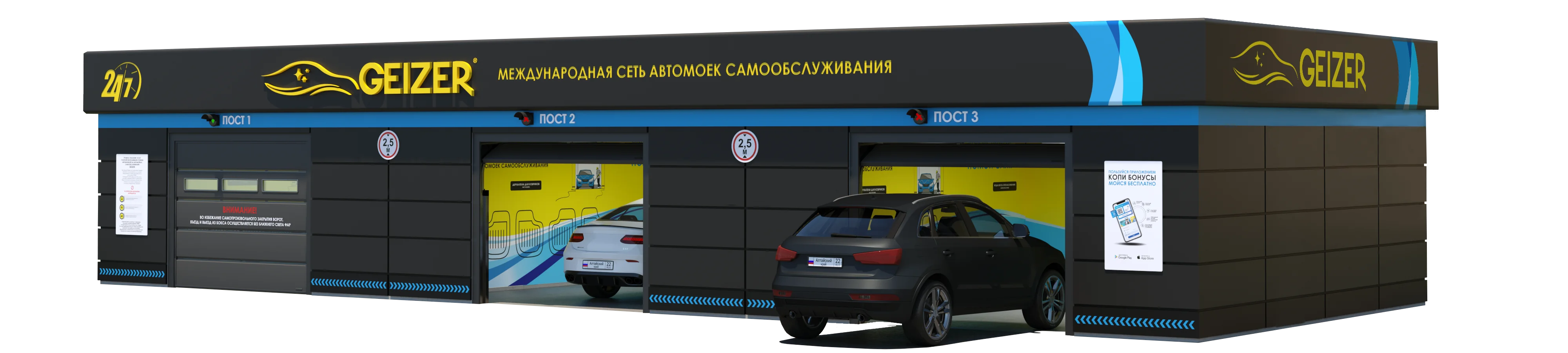
What actually drives revenue — and why you should calculate your specific site, not an average market figure.
Start with three variables
The basic model is built around the number of bays, vehicle flow and average ticket. After that come seasonality, hourly load, utility costs and customer acquisition cost.
FlowHow many cars pass through one bay per day
Average ticketWhich programs customers choose and how long they wash the car
LoadHow demand is distributed between bays and operating hours
Think in scenarios
Conservative, working and optimistic scenarios show the range of possible outcomes. This approach helps you see your safety margin in advance instead of basing a decision on one attractive number.
Start with the mandatory base, then add features that affect customer convenience, average ticket and operation.
The base must cover day-to-day operation
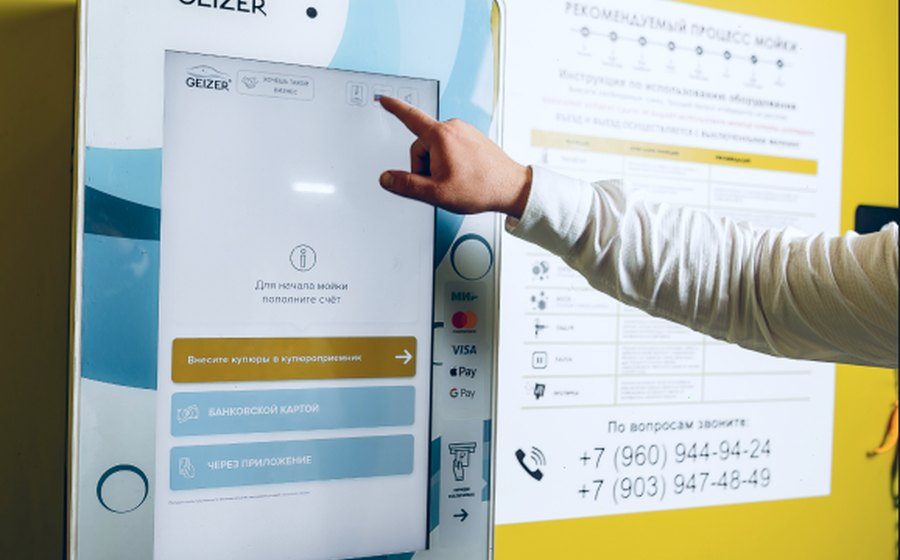
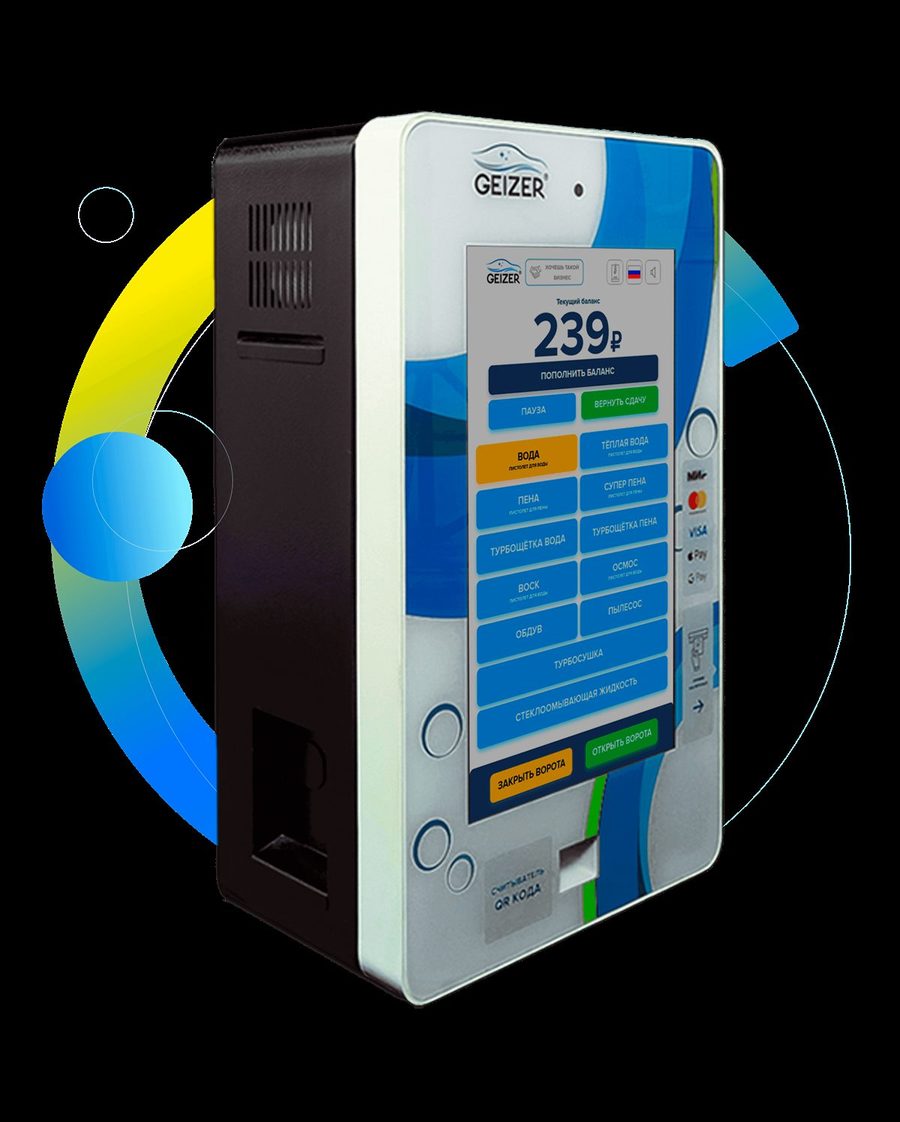
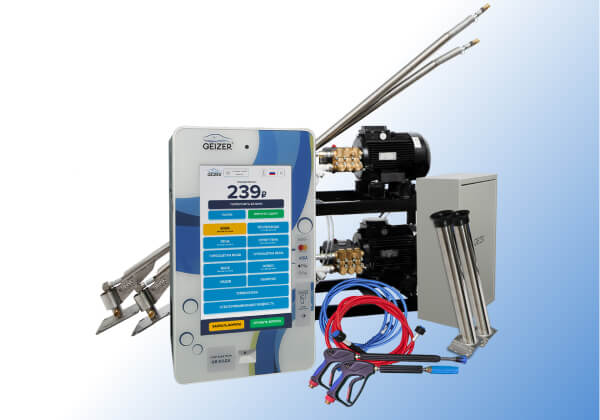
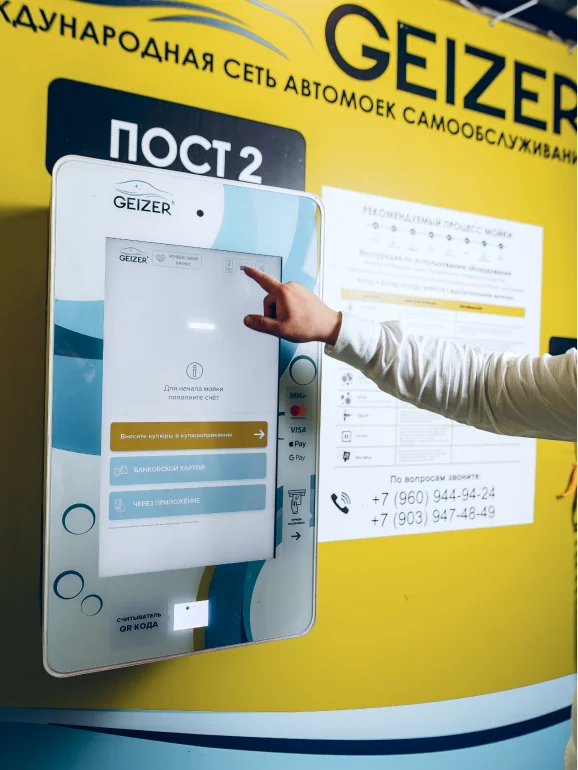
A touch control panel, pumping equipment, vehicle detection and a power cabinet form the base of the station. Additional features are best chosen after assessing the site format and customer behavior.
Determine the number of baysThis determines the power supply, utilities and amount of equipment needed.
Choose wash programsWater, foam, osmosis, wax and additional scenarios.
Add service optionsAir dryer, vacuum, turbo drying, tire inflation and gate control.
Quick estimate of the base kit
Base equipment kitfrom 430,000 ₽per bay · selected: 1 bay. An engineer will calculate the exact cost of your configuration
Area is just the start. It's important to check parking, water, electricity, the utility zone and drainage.
Assess the site as a system
Even a suitable area doesn't guarantee a convenient site. It's important to check the entrance and exit, queuing, equipment placement, access to utilities, and the ability to service one bay without shutting down the whole site.
How to open a self-service car wash: from idea to first car
A sequence of steps that saves months: what to do before signing a lease, what to do in parallel, and what you can't leave until the end.
Do the math before you look for a site
A common mistake is finding a "good spot" first and only then discovering it lacks 380V power or the right water pressure. Build the financial model for your specific city first: vehicle flow, average ticket, seasonality. Only then look for a site that matches the requirements you already know.
Five stages of launch
1. ModelCalculation for your city and number of bays, launch budget
2. SiteLease or own land, checking utilities and access
4. InstallationConnection, commissioning, training on the system
5. OpeningLaunch advertising, first customers, reaching planned load
How long it takes
The timeline depends primarily on the site. If the premises are ready and utilities are in place, installation and commissioning take just days. If the site is being built from scratch, construction — not the equipment — determines the schedule.
What to do in parallel
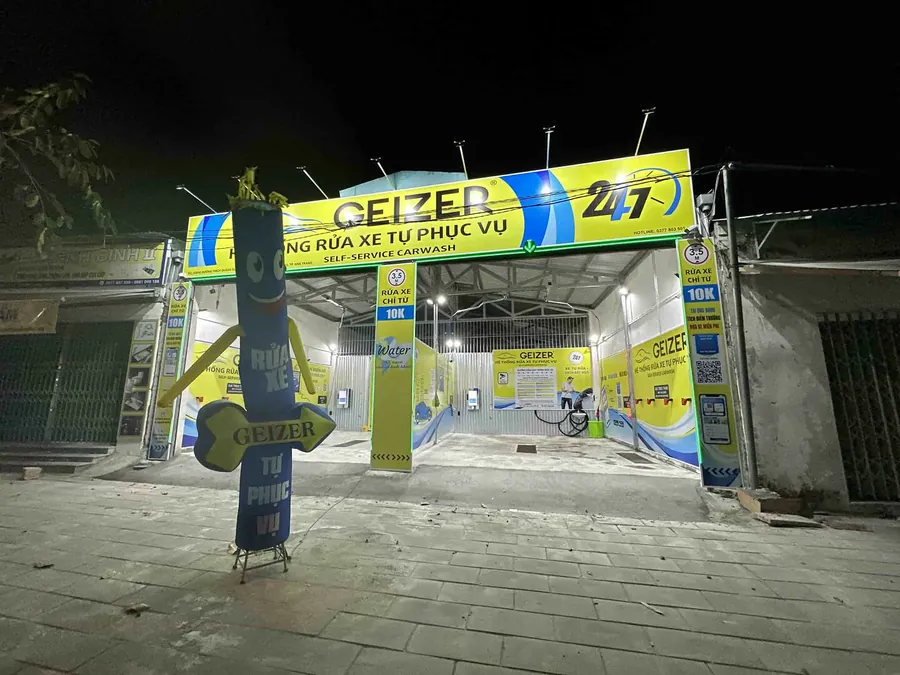
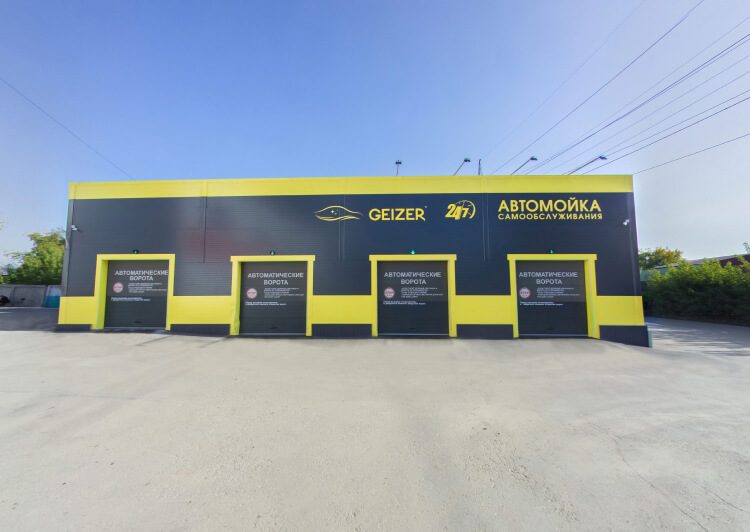
While the site is being prepared, it makes sense to sort out signage, access roads and lighting in advance. These details affect traffic more than they seem to during planning: customers choose a car wash that's visible and easy to drive into.
How to attract your first customers to a self-service car wash
A self-service car wash has a short catchment area. Promotion works where your customers actually live and drive.
A car wash is a local business
Nobody drives across town for a self-service car wash. Your core customer lives nearby or drives past every day. That's why city-wide advertising usually burns budget — you pay for impressions on people who will never make it to you.
Where to start
MapsA listing on Yandex Maps and 2GIS with photos, hours and prices — a free source of customers
SignageVisible navigation and lighting: part of your traffic comes simply because people saw you
Return visitsA bonus app turns a random customer into a regular one
What matters more than advertising
Equipment that works and a clean site. Reviews of self-service car washes are almost always about the same things: was there enough time, was there enough pressure, did the vacuum work. One broken bay generates more negativity than any ad campaign brings in.
Repeat visits
Washing is a recurring need, especially between seasons and in winter, when road chemicals mean cars need washing more often. The job of marketing isn't just to bring in a new customer — it's to make them come back: clear programs, honest timing, bonuses for topping up their balance.
A self-service car wash operates without staff. That means management comes down to data and the ability to intervene remotely.
A business without employees is a business run on instruments
There's no manager at a self-service car wash to tell you how the day went. The owner sees the site through the system: how many cars, revenue per bay, which programs customers choose, and where equipment is behaving unusually.
What remote monitoring gives you
RevenueFor every bay and over time, with no need to visit the site
LoadPeak hours and lulls — the basis for pricing and promotions
ConditionA fault alert before it shows up in the reviews
Multiple sites
With one car wash, you can drop by every day. With a second and third site, that stops working. A single system becomes essential once you have more than one site — otherwise the owner turns into a dispatcher.
Why this affects the money
Bay downtime isn't just lost revenue for a shift. It's a customer who showed up, couldn't wash their car, and will go to a competitor next time. The sooner you spot the problem, the cheaper it is to fix.
Chemistry for a car wash: why the same foam washes differently
Formulas are matched not by product name, but to the water, equipment and load of a specific site.
Water matters more than the chemical brand
Hard water binds active ingredients, so the same foam that worked great at a nearby site can give you weak results and streaks. That's why selection always starts with a water analysis, not with picking a canister.
Three reasons for complaints about foam
DosingCutting concentration is a direct path to "doesn't wash well"
WaterHardness and iron affect the result more than the formula itself
TemperatureIn winter, cold water keeps the chemistry from working
Savings that cost more
Cutting concentrate usage is the fastest way to ruin wash quality. The customer doesn't know about dosing pumps — they just see their car is still dirty, and they don't come back. The difference in chemistry cost per wash is nothing compared to the cost of a lost regular customer.
What to check regularly
Dosing pumps drift, filters clog, water changes with the season. Regularly checking concentration is a routine task that directly protects your reviews and repeat visits.
A 24-hour unstaffed site forgives a lot — except a bay that's down on a weekend.
Downtime costs more than repair
A car wash earns its money in peak hours: weekday evenings and weekends. A bay that goes down on a Saturday doesn't just lose one shift's revenue — it sends customers who came specifically to you straight to a competitor.
What most often takes a bay out of service
WaterScale and contamination are the main cause of pump and nozzle wear
FrostMistakes in winterizing cause the most expensive breakdowns
ConsumablesWorn nozzles and hoses drop pressure and wash quality
Scheduled maintenance instead of emergency repair
Regular diagnostics are far cheaper than emergency repair — and predictable in cost. Replacing consumables on schedule takes hours; recovering from a pump failure takes days, including waiting for a spare part.
Spare parts and service availability
When the manufacturer that services the equipment is the same one that builds it, you don't have to hunt for parts through suppliers. This matters especially in regions where the nearest service center is hundreds of kilometers away.
A station runs around the clock under pressure and in freezing temperatures. The difference between good and bad equipment doesn't show on the day you buy it — it shows in the second winter.
Equipment isn't a one-time purchase
When choosing a station, people usually compare the price per bay. But you end up paying twice: first for the equipment, then for running it. Over several years, repairs, downtime, and chemical and water consumption easily exceed the initial price difference.
Where people usually cut costs, and what comes of it
PumpConsumer-grade service life instead of commercial: lasts months, not years, of round-the-clock work
HeatingWithout proper heating, the wash shuts down in winter exactly when it's needed most
ElectronicsA control panel not built for frost and moisture fails first
DosingImprecise dosing pumps waste chemistry every single day of operation
Climate is the ultimate test
The GEIZER network operates in Siberia, the Urals and the Khanty-Mansi region: Barnaul, Novosibirsk, Novokuznetsk, Krasnoyarsk, Surgut, Kogalym, Novy Urengoy. These are regions where winter temperatures reach −35°C, and cars need washing more often because of road chemicals. Equipment designed for a mild climate becomes seasonal in these conditions.
Downtime is counted in customers, not rubles
A self-service car wash is a habit. Customers go to a specific site because everything there works. One evening with a broken bay on a weekend, and part of your traffic goes to the neighbors — and there's no guarantee it comes back.
Three questions to ask the supplier before buying
Who manufactures the equipment, and do they have their own production. How long it takes a spare part to reach your city. Who will come, and how fast, if the station goes down on a Saturday. The answers to these three questions say more about your future costs than the price list.
The stations that GEIZER's own network runs on — from 430,000 ₽ per bay, direct from the factory in Barnaul.
The manufacturer washes on its own equipment
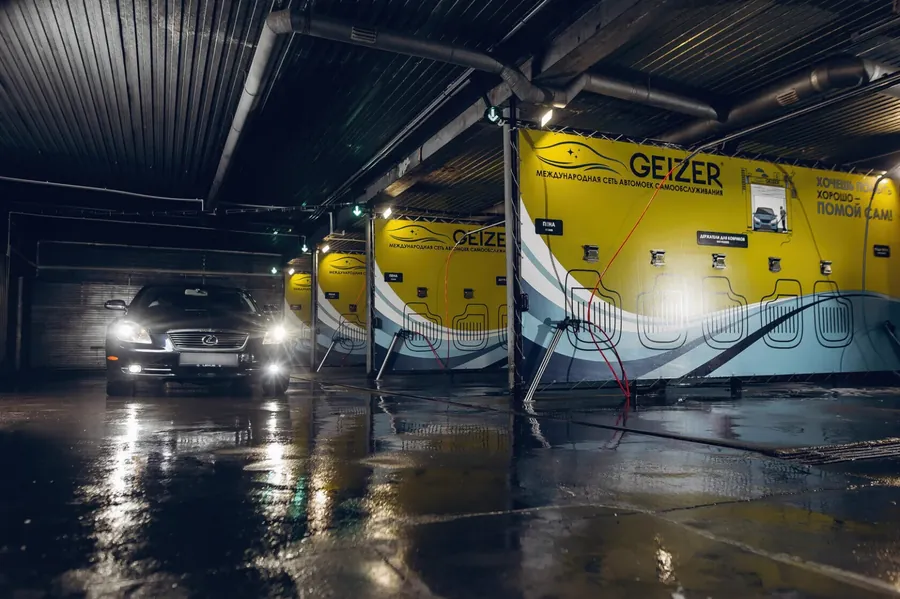
BRIZ is equipment manufactured by GEIZER, and the company's own network of car washes runs on it: 199 car washes and more than 400 bays in 69 cities across Russia, Kazakhstan and Vietnam. The difference is fundamental: a manufacturer that operates its own stations finds out about weak points before its customers do.
What's included in the station
21 featuresFrom basic washing to options tailored to the site's needs
−35…+35°CBuilt for a Siberian winter, not average conditions
From 430,000 ₽Base kit for one bay, no middleman markup
Configured for the site, not "one-size-fits-all"
A car wash on a highway, in a residential courtyard, and in an industrial zone all operate differently: different traffic, different levels of vehicle dirtiness, different customer expectations. That's why the station is built from the features you need rather than sold as one fixed package — you don't pay for options you won't use.
Service and spare parts from the factory
Spare parts come straight from the factory, with no supplier chain. There's a 12-month warranty, followed by post-warranty service. For remote regions, this is often the deciding factor: what matters isn't that a breakdown happened, but how long the site sits idle waiting for a part.
When BRIZ is the right fit, and when it isn't
The equipment is built for commercial load and round-the-clock operation — that's its strength and, at the same time, why it costs what it costs. If your goal is a one-off site with minimal traffic and no plans to grow, it's fair to say the extra durability margin would go unused.