
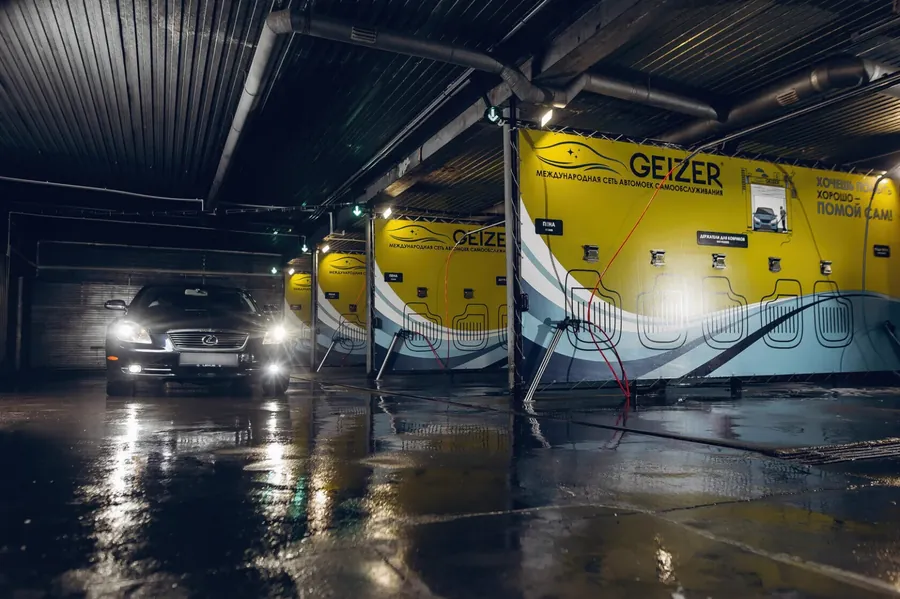
Do the math before looking for premises
A typical scenario: an entrepreneur finds a "great location," signs a lease, and then discovers there's no three-phase power, water is supplied on a schedule, and the sewer connection is two hundred meters away. What follows is either an expensive rebuild or a lost deposit.
The right order is the reverse. Start with a financial model for the specific city: how many cars per day you can realistically expect, the average ticket, how many bays make sense. Requirements for the site follow from the model — and only then do you go looking for premises.
Doing it in reverse order almost always leads to rebuilds and lost time.
Five stages of launch
The stages run in sequence, but some of the work overlaps. While the premises are being prepared, the equipment is already in production — that's what generates most of the time savings.
How long it takes
The timeline is set by the site, not the equipment. If the premises are ready and utilities are in place, installation and commissioning take days. If the site is being built from scratch, construction and approvals set the pace, and here the spread runs from a few months to a year.
A separate variable is the power connection. In some cities this is the longest item in the whole project, so the application should be filed as early as possible.
What to do in parallel
While the premises are being prepared, handle issues that affect traffic more than you'd expect:
- Signage and navigation. Some customers come simply because they saw the wash from the road.
- Lighting. A dark site looks closed in the evening, even if it's open.
- Access routes. A puddle at the entrance turns customers away faster than any breakdown.
- Map listings. Set them up in advance — they start working from day one.
Launch it yourself or under franchise
An independent launch gives full freedom and no royalties, but you'll have to go through everything for the first time: calculations, equipment selection, installation mistakes, marketing from scratch.
A franchise removes some of these tasks — the model, equipment, training, support — but adds royalties and standards obligations. The choice depends on whether you have the time and willingness to figure it all out yourself.
Common mistakes at launch
- Counting revenue based on the best month and multiplying by twelve
- Cutting corners on heating in a region with cold winters
- Opening without signage or map listings
- Building the minimum number of bays "to try it out" — a queue turns customers away more than price does
Frequently asked questions
Where do you start when opening a self-service car wash?
Not by looking for premises, but by doing the maths. First a financial model for the specific town: expected car flow, average check, a sensible number of bays. The model then dictates the requirements for the site — floor area, electrical capacity, water and drainage. Only with those requirements in hand does it make sense to view locations: otherwise it is easy to sign a lease where there is no three-phase power, or where the sewer is two hundred metres away.
How long does it take to open a self-service car wash?
The timescale is set by the building, not by the equipment. If the premises are ready and the utilities are connected, installation and commissioning take days. If the site is built from scratch, construction and permits set the pace — from several months to a year. The least predictable item is usually the electricity connection, which is why that application goes in first.
Is it better to open a car wash on your own or as a franchise?
Going it alone gives you freedom and no royalties, but you go through every calculation, equipment choice, installation and marketing decision for the first time and at your own expense. A franchise covers the model, the equipment, the training and the support, but adds royalties and obligations to the standards. The deciding factor is not the numbers, it is whether you have the time to work it all out yourself.
What mistakes are most often made when opening a car wash?
Four keep repeating: calculating revenue from the best month and multiplying by twelve; skimping on heating in a cold region; opening with no sign and no listings on maps; installing a minimal number of bays "just to try" — a queue on a Friday evening scares customers away far more effectively than any price.