
Equipment isn't a one-time purchase
When choosing a station, people usually compare the price per bay. The logic is understandable: here's one offer for 300 thousand, here's another for 450, almost a one-and-a-half-fold difference. But you end up paying twice — first for the equipment, then for running it.
Over three to four years of operation, costs pile up that never show in the price list: repairs, weekend downtime, chemical overuse from imprecise dosing, electricity and water bills. And this is exactly where a cheap station often turns out more expensive.
A difference of 100–150 thousand upfront pays for itself within a single season if the equipment doesn't go down at peak hours.
Four components people usually cut corners on
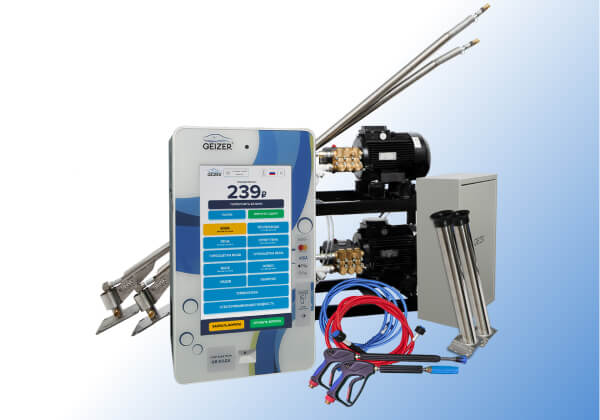
Stations look alike on the outside: housing, control panel, hoses, gun. The difference is on the inside — and that's exactly what determines how many years a site will run without major investment.
Pump
The main component, and the main place unscrupulous suppliers save money. A consumer-grade pump is built for occasional use, not round-the-clock work under load. On paper the pressure is the same, but the service life differs many times over. A wash runs 24/7 — the question isn't whether the pump will hold, but for how many months.
Heating
This is critical for Russia. Without proper water heating and heating in the technical zone, a wash becomes seasonal: in winter it either doesn't work at all, or washes so poorly that customers leave unhappy. And winter is exactly when a car wash is needed most — road chemicals mean people wash their cars more often.
Electronics and control panel
The terminal sits outdoors and operates through temperature swings and humidity. A screen not built for cold starts lagging and freezing — and a frozen terminal is a bay that can't take payment. The customer won't stick around to figure it out; they'll leave.
Chemical dosing
Imprecise dosers cause overuse every single day of operation. Over a year that adds up to a sum comparable to the price difference between stations. The second effect is worse: unstable concentration means the foam washes well today and poorly tomorrow. Reviews pick up on this instantly.
Climate as the ultimate test
The GEIZER network operates in Barnaul, Novosibirsk, Novokuznetsk, Krasnoyarsk, Surgut, Kogalym and Novy Urengoy — regions where winter temperatures reach −35 °C. Equipment designed for a mild climate either sits idle or breaks down in these conditions — and the latter is more expensive.
A simple question to ask a supplier: exactly where do their stations operate, and for how long. If the equipment hasn't survived a single Siberian winter, you'll be the first to test that — at your own expense.
Why downtime costs more than it seems
A self-service car wash earns unevenly. Most revenue comes on weekday evenings and weekends. A bay that goes down on a Saturday doesn't just lose one shift — it sends the people who came specifically to you off to a competitor.
And a car wash is a habit. A customer goes to a specific site because everything works there and they know where each button is. Breaking a habit is easy; rebuilding it is expensive and slow.
Because what's lost isn't just a shift's revenue — it's part of your steady flow of customers.
Three questions to ask a supplier before buying
- Who manufactures the equipment? Is there in-house production, or is it resale? This determines whether the supplier can actually change anything in the configuration, and who is accountable for quality.
- How long does a spare part take to reach your city? For regional sites this is the decisive question. What matters isn't that a part broke, but how long the site sits idle waiting for it.
- Who shows up if the station goes down on a Saturday? Is there service, within what timeframe, what's covered under warranty, and what happens after it expires.
The answers to these three questions say more about future costs than any price list.
What to compare in the end
Don't compare the price per bay — compare the whole picture: component lifespan, performance in your climate, spare parts availability, real service timelines, and whether the supplier has its own production. And ask where you can see a working site — an operating car wash tells you more than any presentation.
Build a configuration and get a quote →Frequently asked questions
What equipment does a self-service car wash need?
The core of a bay is the pump group, the control panel with payment acceptance, the chemical dosing system and the power section. For Russia, water heating and heating of the technical area are mandatory additions. From the outside, stations from different suppliers look alike — housing, panel, hoses, gun — the difference is inside, and it is exactly that difference which decides how many years the site runs without serious spending.
What should you never economise on when choosing car wash equipment?
On four units. The pump: a domestic one is designed for occasional use — on paper the pressure is the same, but the service life differs several times over. Heating: without it the wash becomes seasonal precisely when it is needed most. Panel electronics: a terminal that freezes in the cold is a bay that takes no payment. Dosing: inaccurate pumps mean daily overspend and unstable foam quality.
How do you choose car wash equipment for a cold region?
Check the practice, not the datasheet range: where exactly the supplier's stations run, and for how long. Equipment designed for a mild climate either stands idle at −35 °C or breaks, and the second is more expensive. If the supplier's stations have not survived a single Siberian winter, you will be the first to test that, at your own expense.
What should you ask an equipment supplier before buying?
Three things. Who makes the equipment — is there an in-house factory, or is this resale. How long a spare part takes to reach your city. Who comes out if the station stops on a Saturday, what the warranty covers and what happens after it. The answers say more about your future costs than the price list does.