

Domestic and professional machines: the difference
They look similar: motor, pump, hose and gun. A domestic box often claims pressure comparable to a professional machine, so buyers ask why they should pay several times more.
The difference is how much work the machine can withstand. Domestic machines are made to wash a car, path or fence once a week: switch on, work, switch off and cool. Professional units run hours every day; their pump, motor, supply and serviceable components are designed for that, instead of discarding the entire machine.
If you wash your own car at home, a domestic machine is enough. Proper use is explained in a separate guide. This article concerns commercial washes, where the machine earns revenue and each hour of downtime costs money.

The plunger pump: a professional machine's heart
The main difference lies inside the pump. Most domestic machines have an axial pump: a swashplate on the motor shaft drives small pistons. Compact, light and inexpensive, it is designed for short sessions, often with partly plastic housing.
Professional units have a plunger pump. A crankshaft like a car engine's drives smooth, usually ceramic plungers. They pass through seals in a brass or stainless-steel head and force out pressurized water. The crankcase contains oil like an engine.
What this means in practice:
- Service life. Plunger pumps are designed for sustained loads. Seals and valves wear and are replaced on schedule, not the entire pump.
- Repairability. Components can be dismantled to replace seals, valves and oil. A domestic pump is often easier to replace entirely than repair.
- Steady operation. Professional pumps usually use slow four-pole induction motors. Lower speed means less wear and heat. Domestic units often use fast brushed motors, like drills or vacuum cleaners.
Each model's speed, pressure and flow are listed in its pump datasheet. Manufacturers publish these in public catalogs; compare the datasheet rather than the large figure printed on the housing.
Pressure and flow: what actually cleans
Buyers focus on pressure because it is printed prominently. But cleaning requires pressure together with flow , the liters of water passing through the gun each minute.
Pressure creates impact, dislodging grit and softened dirt; flow carries it away. High pressure and low flow produce a narrow harsh jet that rinses slowly. Normal pressure with good flow rinses faster and is gentler on paint.
The body receives pressure at a distance, not pump pressure. Jet force falls quickly: the difference between holding at twenty and forty centimeters is greater than between two decent machines. See Reverse osmosis and bay pressure.
The key to touchless washing is that dirt is removed by chemicals and time, while the jet dislodges grit at the start and rinses softened dirt at the end. Consistent foam at the right concentration matters more than record pressure.
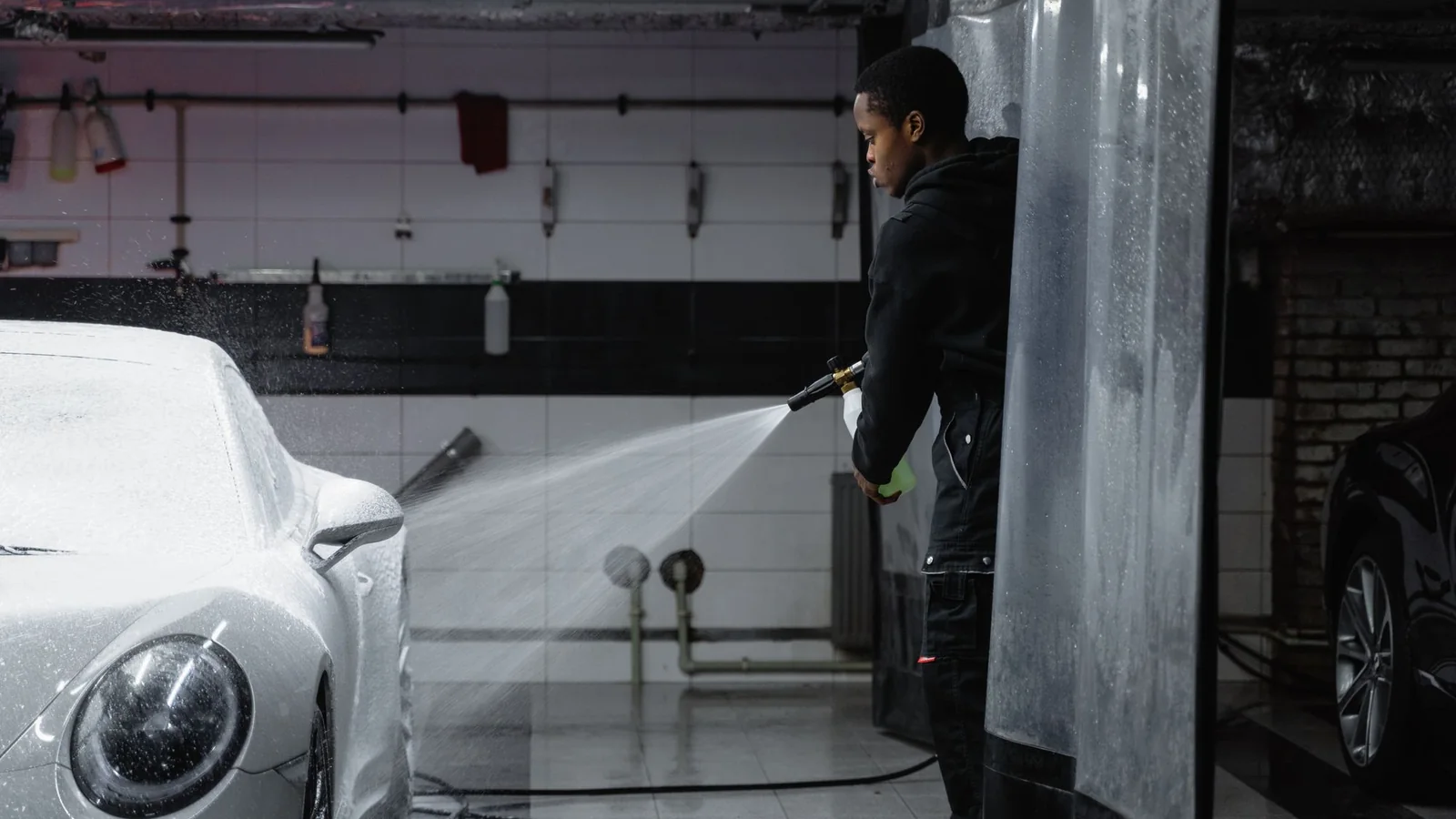
Service life and duty cycle
A domestic machine operates on an intermittent duty cycle: short sessions separated by cooling breaks for motor and pump. Continuous use all evening causes overheating and protection trips; repeated misuse damages seals and motor.
Self-service operation is different. The gun switches on and off dozens of times per car, with many cars consecutively in an evening. Weekday evenings and weekends create peaks, exactly when breakdowns cost most.
Another often-overlooked detail is standby operation. After the customer releases the trigger, the pump keeps turning until controls stop it. Professional systems handle this with a bypass returning water and a motor stop for long pauses. Domestic versions are simpler and not designed for such loads.
Compare purchase prices only after asking how many daily hours and years the machine will operate before overhaul. Ownership cost is explained in Choosing equipment.
380 or 220 V: choosing power for a car wash
After pressure, this is the most frequent question. For a car wash, the short answer is three-phase 380 V. Professional 220 V models exist too, but have a natural ceiling.
The limit comes from the socket: a standard outlet handles up to 16 amps, around three and a half kilowatts for everything connected. A powerful pump, water heating and controls need more. A thicker dedicated single-phase line is possible, but three phases distribute the same load over three conductors and keep the network steadier.
The second argument is the motor. Three-phase induction motors are simpler, start more easily under load and last longer. Commercial-duty pumps use them for this reason.
220 V suits a small service business using the washer occasionally or a location where three phases are unavailable. It is not an option for a self-service wash.
A BRIZ site needs 380 V and 7–12 kW of allocated capacity per bay, with water from 14 L/min. Power is needed from the start: obtain written technical specifications before signing a lease. Other premises checks are in Premises requirements.
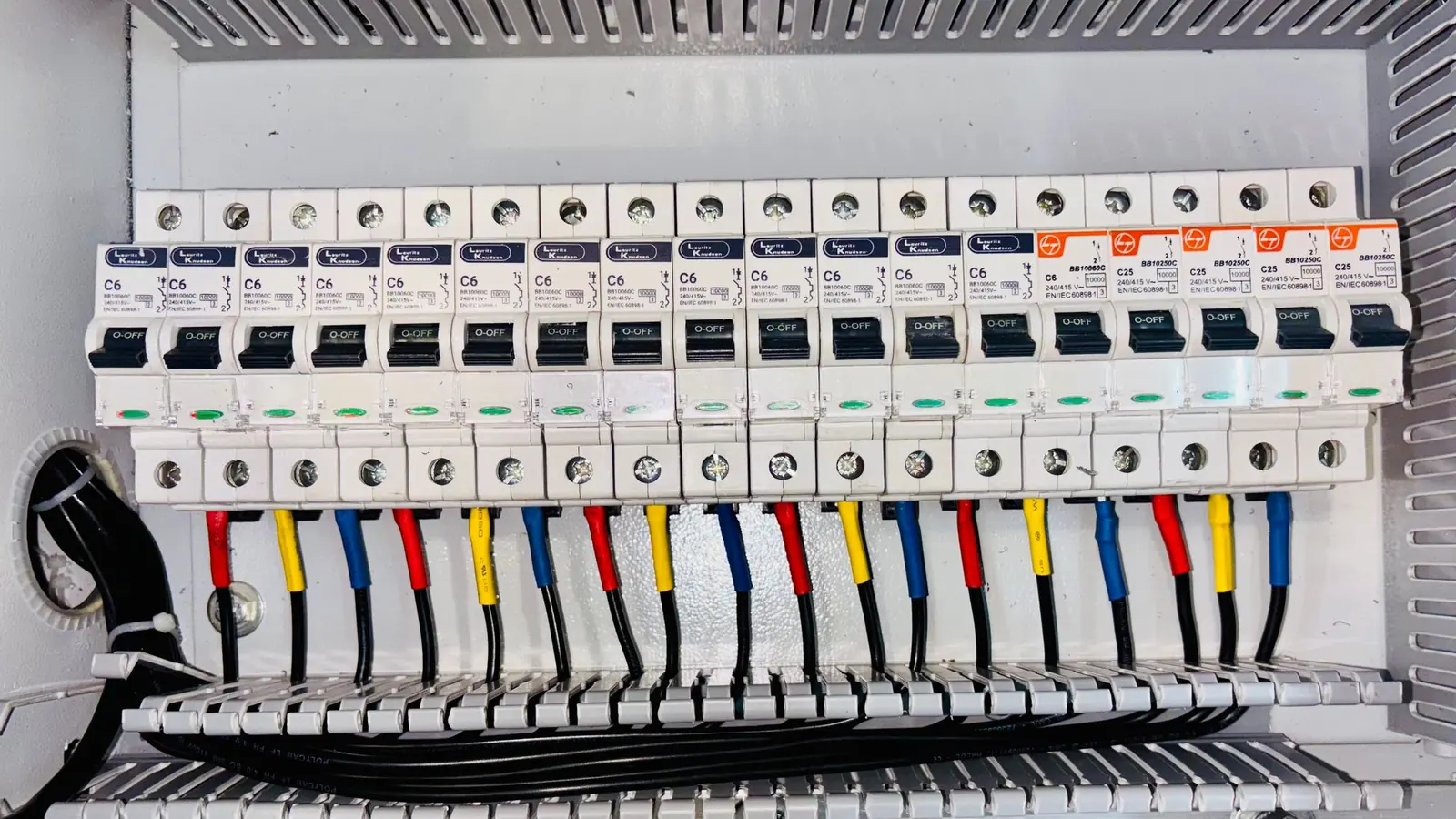
Water heating
Warm water cleans better than cold, softening grease, bitumen and winter road chemicals faster and improving chemical action. The difference is especially noticeable in winter; warm water is itself a reason for customers to choose a bay in freezing conditions.
Standalone professional heated washers usually use a diesel burner, useful for mobile work or workshops. Self-service heating works differently: integrated into the station, it is a program the customer selects on the panel.
BRIZ's Warm Water option includes a 3 kW heating element, pump and temperature control. Choose heating where winters are severe; warm regions need not pay for it. Other climate-specific options are covered in BRIZ packages.
Winter: protection against freezing
The greatest pump danger is frozen water inside, not workload. Expanding ice can split the head, valves and hoses. Domestic instructions therefore require warm storage and winter draining or antifreeze.
A wash cannot do that: bays run around the clock and cannot be brought indoors at night. Protection takes another form:
- Pumps are in a heated technical room, not outside. Technical-area heating is essential in cold regions.
- Water must not stagnate in lines exposed to cooling. Outdoor hoses, booms and guns are most vulnerable; station controls must prevent water freezing in them.
- Controls and electronics are frost-rated. A terminal that freezes electronically below zero creates a bay that cannot accept payment.
BRIZ stations operate from −35 to +35 °C, matching network conditions in Siberia, the Urals and Khanty-Mansi Autonomous Okrug. Cold-region packages add warm water and technical-area heating. Winter preparation steps are explained in Self-service washing in winter.

Why a self-service washer is part of a station
Putting a good professional washer under a canopy does not create a self-service wash. It only supplies pressurized water, while customers need much more:
- Programs. Water, foam, wax and reverse osmosis, switched with one button. This needs precise chemical dosing and controls that switch supply lines.
- Payment. The terminal accepts cards or cash, counts time and money and shows the balance. Without it, the bay earns nothing.
- Reverse osmosis. A separate water-treatment system supplies salt-free final-rinse water so the car dries without streaks.
- Power cabinet. Supply, protection, motor starts and owner connectivity: revenue and fault alerts arrive on the phone.
Everything must work as one system. Components from different suppliers may each function but conflict together: the dosing unit cannot keep up with the pump, the terminal misses a stopped program and nobody knows who owns the fault.
This is why BRIZ is supplied only as a complete station. The basic 430,000 ₽ bay set includes the high-pressure pump unit, chemical dosing, power cabinet, vehicle monitoring and a 24-inch touchscreen. The package is then chosen from 21 features and options for your site. We do not sell a separate washer or pump. The full bay composition is detailed in what a wash station includes; a station overview is here.
What to check when choosing
Whether buying a washer for staffed operation or a self-service station, ask the same pump questions:
- Pump type and manufacturer. Plunger or axial, head material and a datasheet with operating parameters.
- Motor and power supply. Three-phase induction or 220 V brushed motor.
- Standby handling. A bypass and automatic shutdown during pauses.
- Surviving your winter. Pump location and protection for outdoor lines.
- Spare parts availability. Seal and valve delivery time to your city and who replaces them. BRIZ parts come directly from manufacturing; warranty is 12 months.
- Where to see it operating. An operating site says more than a presentation. GEIZER has 199 washes in 69 cities; one may be near you.
If choosing between buying a station and a franchise wash, see the comparison in franchise or equipment.
Frequently asked questions
How does a professional pressure washer differ from a domestic one?
Service life, not the pressure figure. Professional units use a plunger pump with a brass or stainless-steel head and a slow induction motor, designed for hours of daily operation with scheduled seal and valve replacement. A domestic unit with an axial pump and brushed motor is made for short sessions and cooling periods, and fails quickly under commercial loads.
Which pressure washer power supply does a car wash need:380 or 220 V?
For a car wash, choose three-phase 380 V. A standard socket handles up to 16 amps, around three and a half kilowatts for everything connected, which is insufficient for a powerful pump, heating and controls. A three-phase induction motor is simpler, starts more easily under load and lasts longer.220 V suits occasional use. A BRIZ station needs 380 V and 7–12 kW per bay.
What is a plunger pump?
A crankshaft drives smooth plungers, usually ceramic, through seals in a brass or steel head. The crankcase contains oil like a car engine. This pump tolerates sustained loads and can be repaired by replacing worn seals and valves rather than the whole pump. Professional washers and car washes use this type.
Which matters more: pressure or water flow?
Both matter. Pressure dislodges grit and softened dirt; flow carries it away. High pressure with low flow creates a narrow jet that rinses slowly. The pressure reaching the body is also lower at a distance because the jet loses force quickly. In touchless washing, chemicals and contact time remove dirt, so consistent foam matters more than a record pressure figure.
Can one pressure washer create a self-service wash?
No. It only supplies pressurized water. A self-service bay also needs chemical dosing for foam and wax, program switching, a payment terminal, a protected power cabinet with owner connectivity, and reverse osmosis for the final rinse. These must work together, so BRIZ is supplied only as a complete station; the basic set costs 430,000 ₽ per bay.
How can I protect a pressure washer from freezing?
At home, keep it warm and drain water or add antifreeze for winter as its instructions require. At a wash, pumps are in a heated technical room; outdoor hoses, booms and guns remain most vulnerable. BRIZ stations operate from −35 to +35 °C; cold-region packages include warm water and technical-area heating.
Does a car wash need water heating?
In regions with real winters, yes. Warm water softens grease, bitumen and road chemicals faster, improves chemical action and gives customers another reason to choose the bay in frost. BRIZ's Warm Water option includes a 3 kW heating element, pump and temperature control. In warm regions, you need not pay for it.
Can I buy a separate pump or pressure washer from GEIZER?
No. BRIZ is supplied only as a complete station: pump unit, chemical dosing, power cabinet, vehicle monitoring system and touchscreen controls operate together. Your site-specific package is chosen from 21 features and options; separate components and spare parts are not supplied as standalone products.