
Life in Vietnam and your business are one question
Life in Vietnam is often described as an extended holiday: sea, fruit and warmth. But those moving long term face another issue after six months: how to keep funding life. Remote work does not suit everyone and many look at local business. We cover that separately in the article moving to Vietnam: how to support yourself.
Here we approach it from another direction: climate, roads, cities, language and drawbacks, and what they imply for your business. Our perspective is that of a self-service wash manufacturer whose sites already operate in Vietnam.
Our limits first: we do not cover visas, residence permits, taxes or company structure because we lack that expertise and rules change. Ask a local lawyer and immigration adviser.
Climate: why vehicles are washed so often in Vietnam
Vietnam has no single climate. The north, Hanoi and Hai Phong, has a cool, damp winter. The centre from Da Nang to Nha Trang is warm almost year-round, but downpours and typhoons arrive in autumn, roughly September–October through December. The south, Ho Chi Minh City, Vung Tau and the Mekong Delta, has no winter: the dry season runs roughly December to April, and the rainy season May to November.
For daily life, this affects city choice. For business, it affects demand, and climate supports a wash in both seasons.
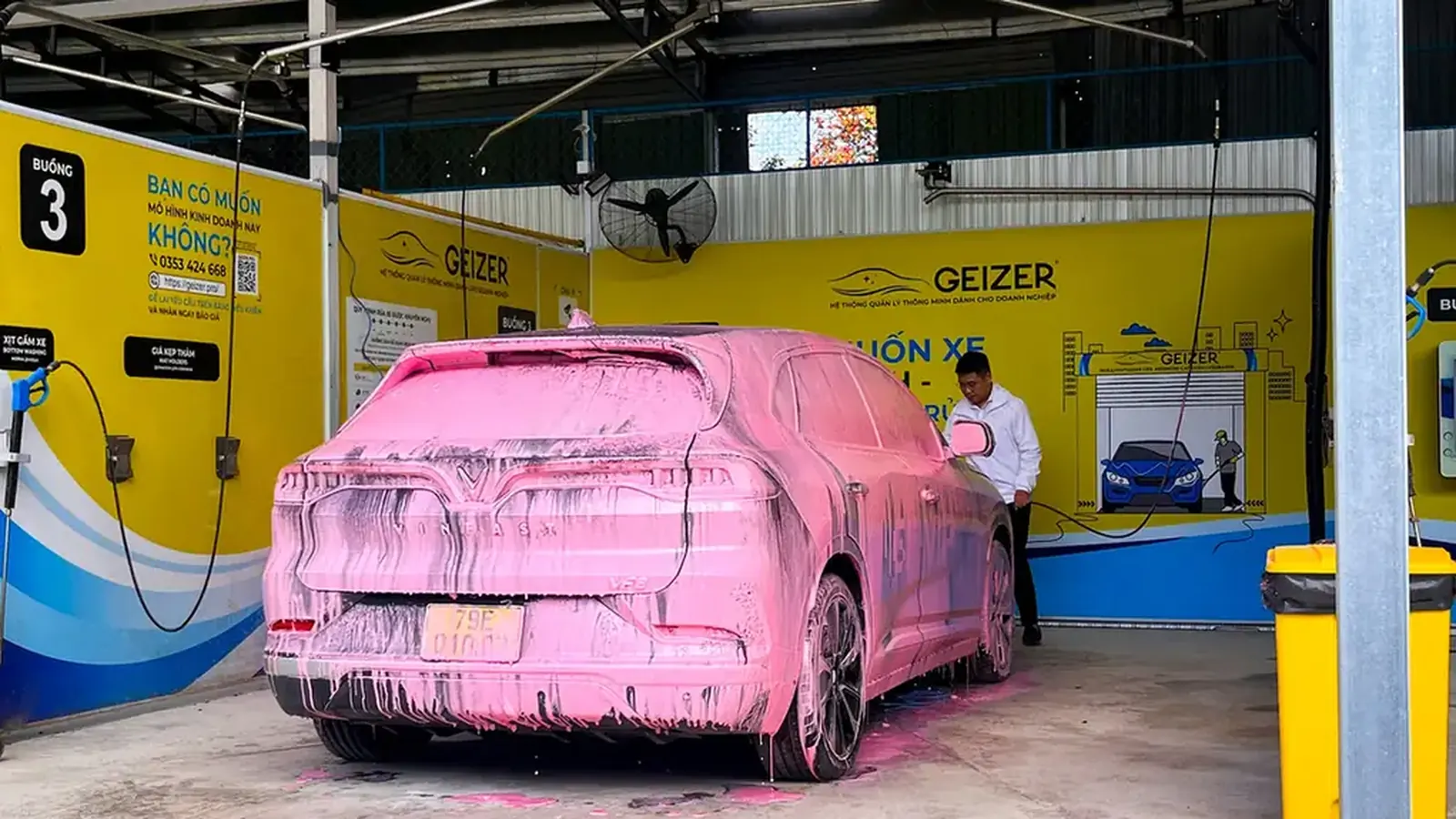
- Rainy season. Short, heavy afternoon showers, red clay, roadside mud and puddles make cars and motorbikes dirty in a single trip. Russia's winter de-icers play a similar role, except here the season is warm.
- Dry season. Less mud, more dust from construction, unpaved exits and wind. Dust covers the body in a day, and washing is wanted just as often.
- No winter. There is no cold-weather shutdown or winter storage; the wash operates year-round. How this works at our sites is explained in the article about self-service washing in Vietnam.
A less-mentioned third reason is the sea. Nha Trang and Vung Tau are coastal, and sea air leaves salty deposits on bodywork. Residents wash cars and motorbikes not only for appearance but to keep salt from damaging metal and chrome. This gives resort-city wash customers another reason to return.
The main conclusion: what irritates residents in Vietnam, downpours, dust and post-rain mud, is why customers visit a wash.
Motorbikes: a separate customer stream
Vietnam is a motorbike country. People ride to work, school and markets, carrying goods and children. For newcomers this is the first everyday shock: dense traffic, its own driving conventions and helmets required for both rider and passenger.
For business, this is a customer stream almost absent in Russia. Motorbikes get dirty in rain and dust like cars and are used daily. Their washes are shorter and cheaper, but frequent visits fill hours with fewer cars. One site therefore serves two streams: cars and motorbikes.
The practical site requirement follows: convenient entry from a street used by motorbikes and a clear bay that people can use without explanations. Read more in the guide how a wash in Vietnam works; we will not repeat it here.
Where Russians live and our washes already operate
Russian-speaking residents are concentrated in several cities. Each has its own character for living and its own business logic.
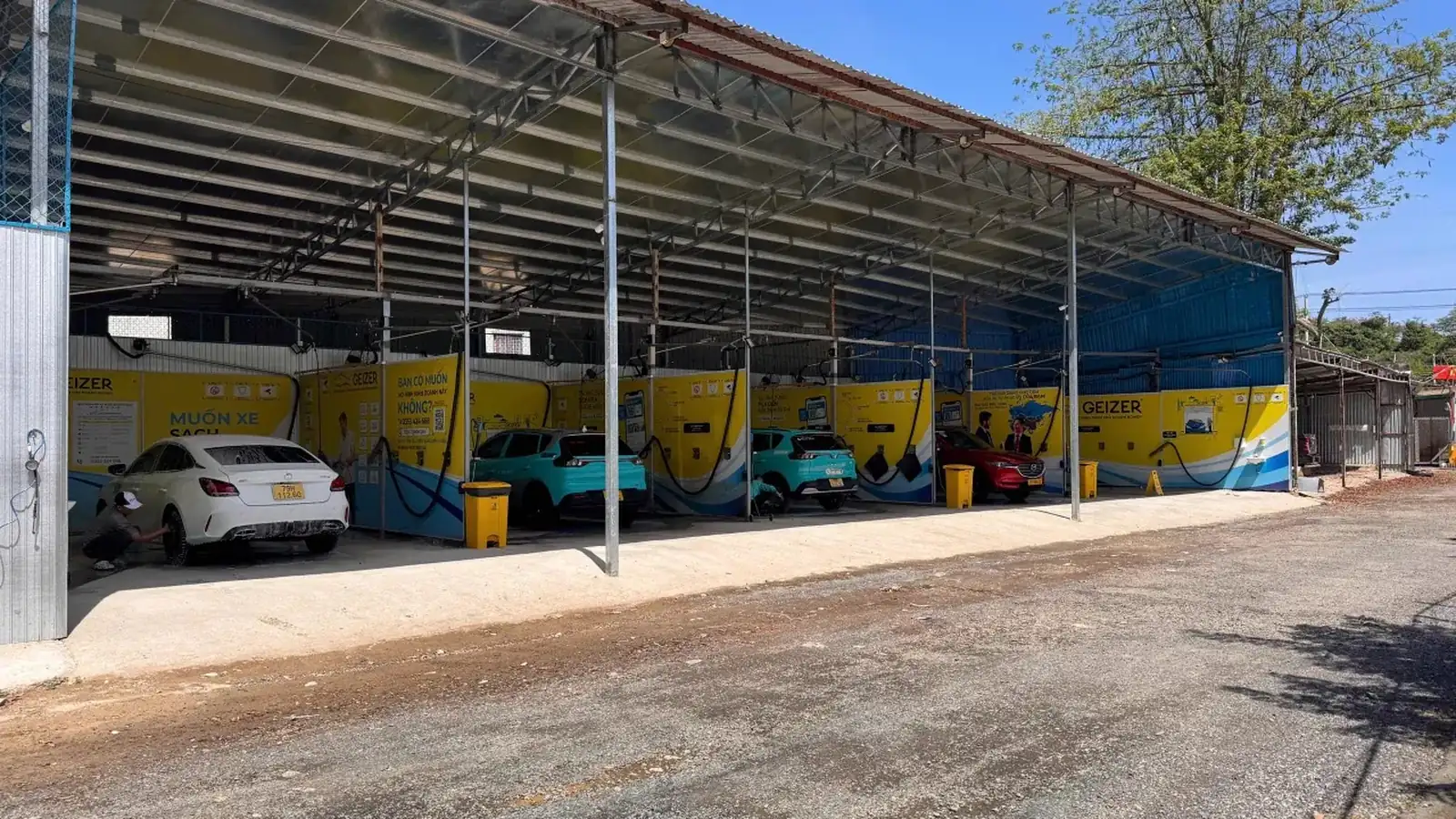
Nha Trang. The country's most Russian-oriented city, with Russian signs, agencies, doctors and cafés. Living without Vietnamese is easiest here. Our Nha Trang washes already operate; one is pictured below.
Ho Chi Minh City. The largest city and business centre, with enormous car and motorbike traffic, international clinics and schools. There are fewer Russians than in Nha Trang but more who came to work. Our washes operate here too.
Vung Tau. A coastal city near Ho Chi Minh City, quieter than the metropolis, with a long-established Russian-speaking community. A GEIZER wash operates in Vung Tau too.
Da Nang. A fast-growing resort city in central Vietnam, with new neighbourhoods and a long beach, but autumn rain and typhoons. We have no washes there yet.
Beyond these cities, we have a wash in Dak Mil, a small provincial town. That range matters: the format operates in both a metropolis and a small town. It does not mean every address will work; calculate each separately using nearby car and motorbike traffic.
Language and relocation: which business suits a Russian in Vietnam
Vietnamese is tonal: different intonation changes a word's meaning, and conversational proficiency can take years. Russian helps in Nha Trang; English and phone translators help in large cities. That can cover daily life, but not a business requiring daily negotiations with staff, suppliers and customers.
This gives a simple business filter: the more daily Vietnamese conversation it requires, the harder it is for a newcomer. A café, guesthouse and tourist services rely on personal presence and conversation. We compare these niches in the article what business to open in Vietnam.
Self-service washing is different: customers enter, pay at the terminal and wash themselves. With almost no staff and phone-based management, revenue, utilisation and fault alerts appear in the account dashboard. Owners still participate: someone must clean, load chemicals and watch equipment. But this is not a counter shift, and the language barrier does not stand between you and every customer.
Relocation also brings a time difference: Vietnam is four hours ahead of Moscow. Remote work means evening calls; a local business runs on local time, as you do.
Vietnam's lifestyle drawbacks as business risks
Anyone who has spent a season in Vietnam knows the drawbacks. For a wash owner, each has a business dimension and a way to address it. Nobody has guarantees; there is a process that reduces risk.
- Heat and humidity. Demanding for people and equipment: electrics, pumps and chemicals must suit the tropics. Bay canopies, technical-room ventilation and regular maintenance are mandatory design elements, not options.
- Typhoons and downpours in central Vietnam. Strong winds and flooding affect the central coast in autumn. Account for this when choosing land: avoid low ground, provide drainage and use a sturdy canopy.
- Language barrier. Builders, suppliers and local services speak Vietnamese. An on-site team handles negotiations, with Russian-language support from the equipment supplier.
- Road chaos. A drawback for living, but a clue for location choice: you can see where traffic is denser. Entry must still be safe or customers will bypass it.
- Local legal matters. Registration, leases and permits are outside our expertise. A local lawyer handles them and their cost is a separate project line.
- Distance from Russia. If you move away, the site should not need you there every day. That is why phone-based management matters.
Another daily-life issue newcomers notice is water. Tap water is not drunk directly, and its composition varies greatly between cities. For washing, hardness directly affects chemical consumption and streaks after drying. Water treatment is therefore selected for the specific city rather than using a generic setup. We explain why in the article about reverse osmosis and wash water.
Choosing the wrong location is a separate risk, the same in Russia and Vietnam. Reduce it the same way: measure traffic before taking the land. Project budget components are explained in the article how much it costs to open a business in Vietnam.
Seasons and winter stays: when to come
Many begin with a winter stay. December to April is dry in the south, Ho Chi Minh City and Vung Tau; Nha Trang usually has settled weather from January; Da Nang is rainy and windy in winter; Hanoi is cool.
Use a three- or four-month winter stay to explore a business. You can see how you handle heat and roads, where cars and motorbikes travel, where they are washed and how long queues are. Visiting in the rainy season is useful too, when wash demand is most visible.
Open a self-service wash in Vietnam with GEIZER
If you see yourself in Vietnam as a business owner as well as a resident, the next step is a specific location, not choosing a country. We manufacture self-service wash equipment and support launch in Russian; our washes already operate in Nha Trang, Ho Chi Minh City, Vung Tau and Dak Mil.
Before contacting us, answer a few questions to assess whether this format suits you at all.
- Where will you live? Near the site, in another city or partly in Russia. This determines who will be on site each day.
- Which location are you considering? Your own land, a lease or just a neighbourhood idea. A specific address makes the conversation more precise.
- Who can help locally? A local partner, acquaintances or a future employee for cleaning and loading chemicals.
- How much time can you give the business? An almost staff-free wash needs no shift but does need attention: checking reports, responding to faults and looking after the site.
We need your city or prospective land and an understanding of the time you can give the site. We will assess the location, estimate a matching project and explain operating sites. Terms, locations and the application form are on the page Open a self-service wash in Vietnam with GEIZER.
Frequently asked questions
What business suits Russians in Vietnam?
One that does not depend on daily Vietnamese conversations and personally working behind a counter. Food service, guesthouses and tourist services need you every day. A self-service wash has almost no staff and phone-based management: customers wash themselves, while revenue and utilisation are visible in the account dashboard. Owner involvement is still necessary, but it is not a shift.
Where in Vietnam should you open a wash?
Where there are many cars and motorbikes and convenient street access. Our washes already operate in Nha Trang, Ho Chi Minh City, Vung Tau and Dak Mil, demonstrating the format in both a metropolis and the provinces. But each location is calculated separately using nearby traffic before taking the land.
Why is there demand for car washing in Vietnam?
Climate. During the rainy season, cars and motorbikes get dirty in a single trip; in the dry season dust covers them. There is no winter shutdown. Motorbikes are also the main transport, creating a second customer stream almost absent in Russia.
Do you need Vietnamese to run a business in Vietnam?
Russian in Nha Trang and English in large cities can be enough for daily life. A business with staff and ongoing negotiations needs the language. At a self-service wash, customers interact with a terminal, and an on-site team handles builders and services. Our support is in Russian.
What are the disadvantages of doing business in Vietnam?
Heat and humidity strain equipment; central Vietnam has autumn typhoons and flooding; builders and services speak Vietnamese; legal matters require a local lawyer. Design accounts for these risks with canopies, ventilation, land outside low-lying areas and an on-site team. Nobody guarantees income: results depend on location and traffic.
What are the main disadvantages of living in Vietnam for Russians?
Persistent humid heat, dense motorbike traffic, language barriers outside tourist areas, noise, autumn downpours and typhoons in central Vietnam, and a long flight to Russia. Most drawbacks emerge after a month or two, so first trying an extended winter stay is advisable.
Where is best for Russians to live in Vietnam?
Nha Trang has the largest Russian community, making daily matters possible without Vietnamese. Ho Chi Minh City offers international schools and clinics but no sea. Vung Tau is a quieter coastal city nearby. Da Nang is a growing central resort city with autumn rains and typhoons.
Can you manage a Vietnamese wash from Russia?
You can oversee it: revenue, bay utilisation and fault alerts are visible on the phone dashboard from any country. But someone is still needed on site for cleaning, loading chemicals and minor tasks. Visas and registration are matters for a local lawyer.