
Why the money question is the main one
Relocation is discussed through visas, housing and schools, but it hinges on something else: what the person will be earning a year from now. A visa gets extended, a flat gets changed, but the source of income decides whether the family stays or goes back.
We look at Vietnam from one side — our own. We have seven working sites there, and we see what a local business looks like from the inside: what eats time, what depends on the language and what runs by itself. That is what we share. Everything we do not know is named honestly at the end.
Remote work: what is good about it and what is not
The most common answer to "what to live on" is remote work. It really is a workable path, and most people arrive with it: the clients stay the same, the income is in roubles or foreign currency, and the country changes like scenery.
The drawbacks of this path are clear too, and they show up not at once but in the second or third year.
- The income is not tied to the country you live in. Your outgoings became local while your income stayed where you left. Any move in the exchange rate changes your standard of living although you did nothing.
- Your time runs on someone else's clock. The difference with Moscow is four hours, and the working day shifts into the evening. That is not a disaster, but it is your evening.
- Nothing grows while you are away. Stop working and the income stops. No asset appears in the meantime.
That is why after a year or eighteen months many start looking for a second footing: something local, in local currency, that keeps working while you are busy with something else.
What people open locally
The set is fairly predictable, and each option has its own price in time.
- Catering. A coffee shop, a kitchen, a bar. A low threshold to enter and a high one to stay: daily presence, staff, purchasing and checking quality by hand.
- Housing for guests. A guest house or flats to let. A clear model, but it is about the season, reviews and constant day-to-day work.
- Services for visitors. Tours, transfers, help with paperwork. It starts from nothing and rests on you personally — go away for a month and the flow stops.
- Equipment for hire, or self-service. Laundries, car washes, vending. More expensive at entry, but it works without you being there every day.
The first three have one thing in common: you are buying yourself a job, not an asset. That is a fine choice if you enjoy the job. But someone who left for a different pace of life often discovers he bought a restaurant and lost his mornings.
A business that does not require your presence
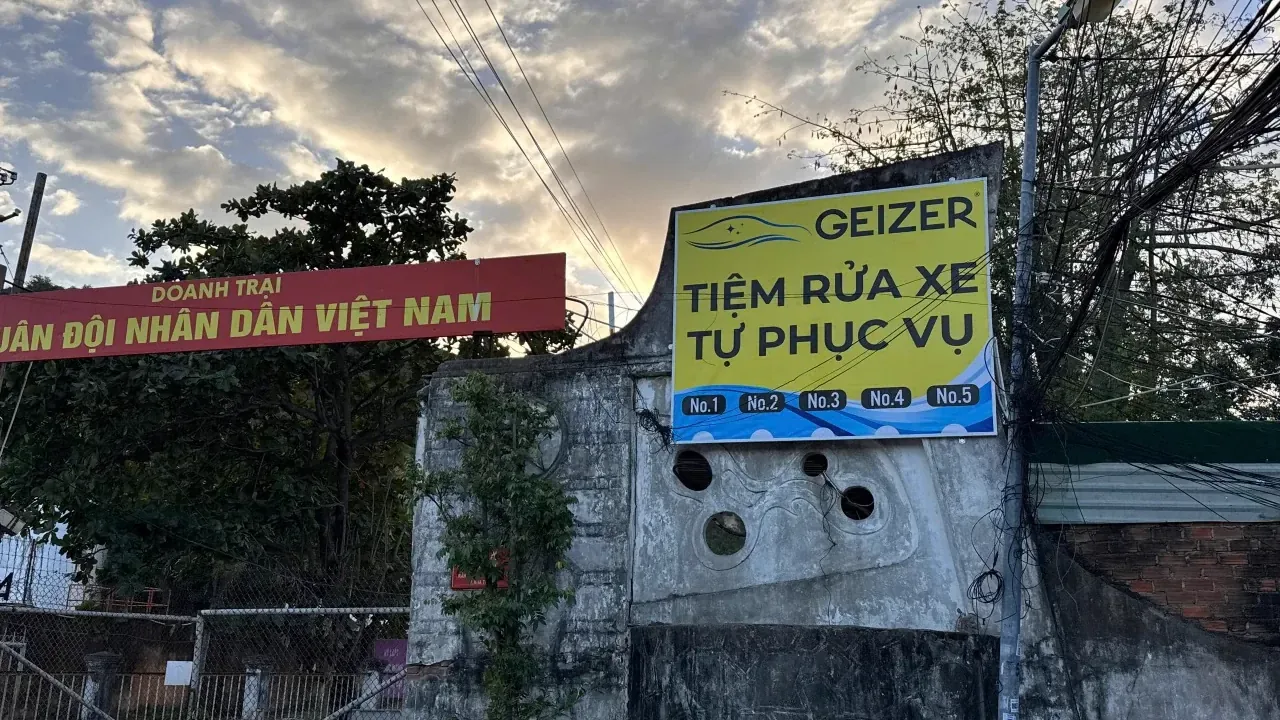
Our segment is self-service car washes, and about those we know in detail. It works like this: a driver pulls into a bay, pays at the terminal and washes the car himself. There is no staff at the bays. The owner needs someone to clean the grounds, load chemicals and handle small jobs, while revenue, bay load and fault alerts are visible in the online account from a phone.
In Vietnam this format has three features that do not exist in Russia.
- Motorbikes. Two-wheeled transport here is the main way of getting around, not a hobby. It is a separate stream with a short visit and a low ticket, which evenly fills the site in the hours when cars are scarce.
- All year round. There is no winter shutdown and no off-season idling: the site works 365 days. The rainy season works like a Russian winter in reverse — demand rises during it.
- Few competitors in the familiar format. There are still few European-style self-service washes on the market, while the vehicle fleet grows every year.
Prices at our bays: from 10,000 ₫ for washing a motorbike and from 20,000 ₫ for a car. By Russian standards the ticket looks small — but the customer compares it with local prices, not Russian ones.
The network's seven sites stand in places of very different size: two in Ho Chi Minh City, two in Nha Trang, plus Vung Tau, Dak Mil and Tan Thanh. The spread matters more than the list: the format works both in a multi-million city and in the provinces. That does not mean it works everywhere — you have to count the traffic at the specific address.
What entry costs
The equipment costs the same as in Russia: from 148.500.000 ₫ per bay with delivery, installation, commissioning and training. The station travels from Barnaul, where we make it.
Everything else is local and calculated for a specific address: rent or land, site preparation, connecting water and power, contractors' work, a lawyer. It is that part, not the equipment, which most often decides whether the project adds up.
The calculated benchmark for revenue is from 121.770.000 ₫ a month per bay. This is a model, not a guarantee of income and not an obligation: the result depends on the location, the flow of vehicles and the operating hours. How the model itself is calculated is set out in the article about what entry costs.
What we do not know
Visas, residence permits, company form, foreign ownership share, taxes and reporting — we do not cover these. We have no expertise of our own, and retelling other people's guides would be dishonest: the rules change and we could not answer for them. That work is done by a local lawyer, and their fee goes into the project budget as a separate line.
Nor do we recommend niches outside our own. The coffee shop, guest house and tours above are named for completeness, not as advice: in them we have neither figures nor experience.
If the self-service format suits you, the next thing to look at is not the country but the specific place: how a town and a location are chosen — the rules there are the same as in Russia; only the landmarks change.
Frequently asked questions
What to live on in Vietnam without remote work?
In practice it is either a local business or income from Russia. Locally, people most often open catering, rental housing, services for visitors and self-service equipment. The first three demand daily presence; the last does not. We work in that last segment: seven self-service car washes, no staff at the bays, control from a phone.
What does it cost to start a business in Vietnam?
In our segment the equipment is from 148.500.000 ₫ per bay with delivery, installation, commissioning and training — the same as in Russia. The rest is calculated for a specific address: rent or land, site preparation, water and power, contractors, a lawyer. That part varies more than the equipment itself.
Do you need to speak Vietnamese?
For working with us — no. Support is in Russian at every stage, and negotiations with local builders, suppliers and utilities are handled by the team on the ground. For daily life the language certainly helps, but opening a site does not hinge on it.
What are the visas and taxes in Vietnam?
We do not answer this and do not retell other people's guides: we have no data of our own and the rules change. That is the work of a local lawyer or migration adviser, and it goes into the relocation budget as a separate line.
Can you run a site without living in Vietnam?
Yes, and some of our partners do exactly that. A self-service wash runs with no staff at the bays: revenue, load and fault alerts are visible in the online account from a phone in any country. On site you need someone to clean the grounds and load chemicals — a few hours, not a full day.