

Franchise, existing business or starting from scratch
In 2026, the same three routes remain: start from scratch, buy an existing business or buy a franchise. They look similar because you invest and obtain a location, but you buy something different each time.
- Starting from scratch. You choose the format, suppliers, prices and name. Freedom is complete, but all mistakes are yours: model, location, purchasing and promotion are tested with your money.
- An existing business. You buy an operating location with customers and revenue history. The key question is why it is being sold: the seller provides the numbers, and checking them before the deal is difficult.
- A franchise. You buy a system rather than a location: brand, model, supplies, training and support. You open the site under network rules and pay an initial fee, royalties or both.
The main criterion follows: a franchise makes sense if the system avoids some startup mistakes for less than those mistakes would cost. This distinguishes worthwhile franchises from empty offers, not loud advertising or a thick presentation.
Available franchises 2026: choosing a sector
Available franchises are currently marketed to new partners. Directories list them, but franchisors normally supply their own descriptions, so fees, payback and site counts are seller statements. Directories help identify options; you must verify them yourself.
The year in franchises 2026 does not change due diligence. It reminds you that terms change and last year's article may quote outdated figures. Rely on the terms in the actual contract you receive.
Do not compare fees before deciding how much personal time you can give. Owner involvement broadly divides franchises into three groups.
- Doing the work yourself. Services where the owner is the main expert: a technician, trainer or teacher. The outlet stops without you and growing beyond one location is difficult.
- Managing people. Cafés, shops and staffed service outlets. Recruitment, schedules, training and holiday or sickness cover are the main tasks. Management ability matters greatly.
- Managing a site. Equipment-based and self-service formats. Staffing is low, but location, consumables, breakdowns and records remain your responsibility. Work shifts from serving behind a counter to oversight and maintenance.
There is no best group. Choosing staff-heavy operations when you dislike managing people, or equipment when you will not learn machinery and service, is a mistake. An honest self-assessment matters more than a fashionable sector. Six sectors and their demands on owners are examined in What business to start in 2026.
Questions 1–3: how much, for what and to whom you pay
Use the same checklist for any listed franchise. The first three questions cover money.

1. Initial fee: what it buys. This one-off joining fee is neither inherently good nor bad. What matters is training, site design and launch help provided in return, and what happens if the site never opens. If all it buys is brand permission, the deal is weak.
2. Royalties: calculation and start date. Monthly payments may be a revenue percentage or fixed amount. Clarify the base, when charges begin and what the network provides every month. Royalties payable before opening are a warning sign.
3. Price inclusions and expenses paid elsewhere. Ask for two budget sections: purchases from the network and costs you pay yourself, including rent, renovation, connections, documents and opening advertising. The second often exceeds the first. Ask separately about mandatory purchases: supplier, prices and possible revisions.
Questions 4–7: checking real performance
4. Operating locations. Request addresses and owner contacts, not just those selected by sales. Visit at least one. Ask what went wrong at launch and how the network responded, rather than simply whether the owner is happy.
5. Service and spare parts. For equipment-based businesses, find out who repairs it, response time, spare-parts location and warranty coverage. Peak-season downtime costs more than any fee.
6. Projections for your city. Network-average revenue says nothing about your location. A worthwhile franchise assesses actual traffic, competitors and residents and honestly rejects unsuitable sites. Projections without site questions are advertising, not analysis.
7. Leaving the network. Read termination terms before signing: exit conditions, assets you keep, penalties and restrictions on the same business. Reluctance to discuss this is an answer too.
Ask all seven questions in writing and request written answers. Verbal promises do not enter the contract, and identical questions make franchises easier to compare.
Warning signs of an empty franchise offer
One sign alone is not a verdict. Several together are a reason to stop.
- Guaranteed income or typical payback is promised without looking at the site.
- No operating addresses, or only one model location is shown.
- Pressure to hurry: a discount ends this week or the city's last slot is available.
- The contract is unavailable in advance or shown only after payment.
- A substantial fee without a clear explanation of what it provides.
- Network payments start before the site opens.
- Mandatory purchases without contractual prices.
- Support is only the phone number of the salesperson.
A good sign is a franchisor rejecting a poor location and accepting a lost sale rather than adding a failed site to the network.
What a worthwhile franchise actually means
Worthwhile does not mean fashionable, cheap or famous. The network should give more than you pay: avoid launch mistakes, handle supplies and service, and help find customers. Several signs make this visible.
- Aligned interests. Look at how the network earns. If income depends on operating-site revenue, it benefits from your opening and remaining successful for years.
- Real sites to visit. Operating addresses are public and owners discuss difficulties too.
- Projections start with the location. Before discussing revenue, the franchisor asks about the site, traffic and competitors.
- Everything is written down. Supplies, payments, service and exit terms are in the contract, not only discussed at meetings.
- Support continues after payment. It is clear who answers questions and responds to breakdowns once the site operates.
Also check personal suitability. Even a reliable network will not fit if the sector feels unfamiliar or demands more time than you can give. A worthwhile franchise is a pairing: a trustworthy system and a format you can sustain.

Buying a franchise: from inquiry to launch
Buying a franchise is a sequence, not one payment. You may leave any step before signing; that is the purpose of due diligence. The general process follows.
- Inquiry. You leave contact details and receive a presentation and terms. Immediately request a contract sample and operating addresses; willingness to provide them is revealing.
- Due diligence. Ask seven written questions, visit sites and speak to owners. Meanwhile calculate whether funds cover the whole budget, not just network payments.
- Location and projections. Select land or premises; the franchisor assesses the location and its economics. If the numbers do not work, find another site rather than different numbers.
- Agreement. Read everything before paying, preferably with a lawyer. Every verbal promise on payments, supplies, timing, service and exit must appear in the contract.
- Launch. Site preparation, supply, installation, training and opening. This reveals whether the network provides practical help or only advice.
- Operating in the network. Recurring payments and support begin. This is the longest stage and the reason for buying a franchise, so ask most thoroughly about it before the deal.
The order matters: checks and projections first, contract next, money last. If asked to reverse it, revisit the warning signs.
Example: GEIZER terms using the same questions
To make the checklist concrete, apply it to our GEIZER self-service wash franchise. We have manufactured BRIZ equipment in Barnaul since 2015. Below are only our published terms. Car wash franchise selection is examined in how to choose a self-service car wash franchise.
- Initial franchise fee. 0 ₽.
- Royalties. 5% of operating-wash revenue, with no royalties before opening. Partners receive the brand, CRM, owner account, app, support and software updates.
- Included and separate costs. Bay equipment with delivery, installation, commissioning and training starts at 450,000 ₽ per bay; two bays start at 900,000 ₽. Site preparation, connections, canopy, signage and paperwork are separate after inspection.
- Operating locations. 147 partners,400+bays and 199 washes in 69 cities. Partners, not the company, own the washes; their locations appear on the Network cities.
- Service and spare parts. 24/7 support, remote diagnostics, spare parts stock, engineer visits and a 12-month equipment warranty. Operating temperatures are −35…+35 °C.
- Local projections. Before launch, we assess traffic, competitors and residential areas, check the site and documents and advise how many bays it can support, from 1 to 6.
- Leaving the network. Ask us as you would any franchisor: request the agreement and read termination terms before signing.
Joining GEIZER follows the same stages: meeting the company, visiting manufacturing and an operating wash; assessing city and site, choosing format and calculating economics; supply, installation, commercial concession and maintenance agreements; equipment production, installation and commissioning; instructions, standards and CRM training; opening marketing. Stages are detailed on the franchise page.
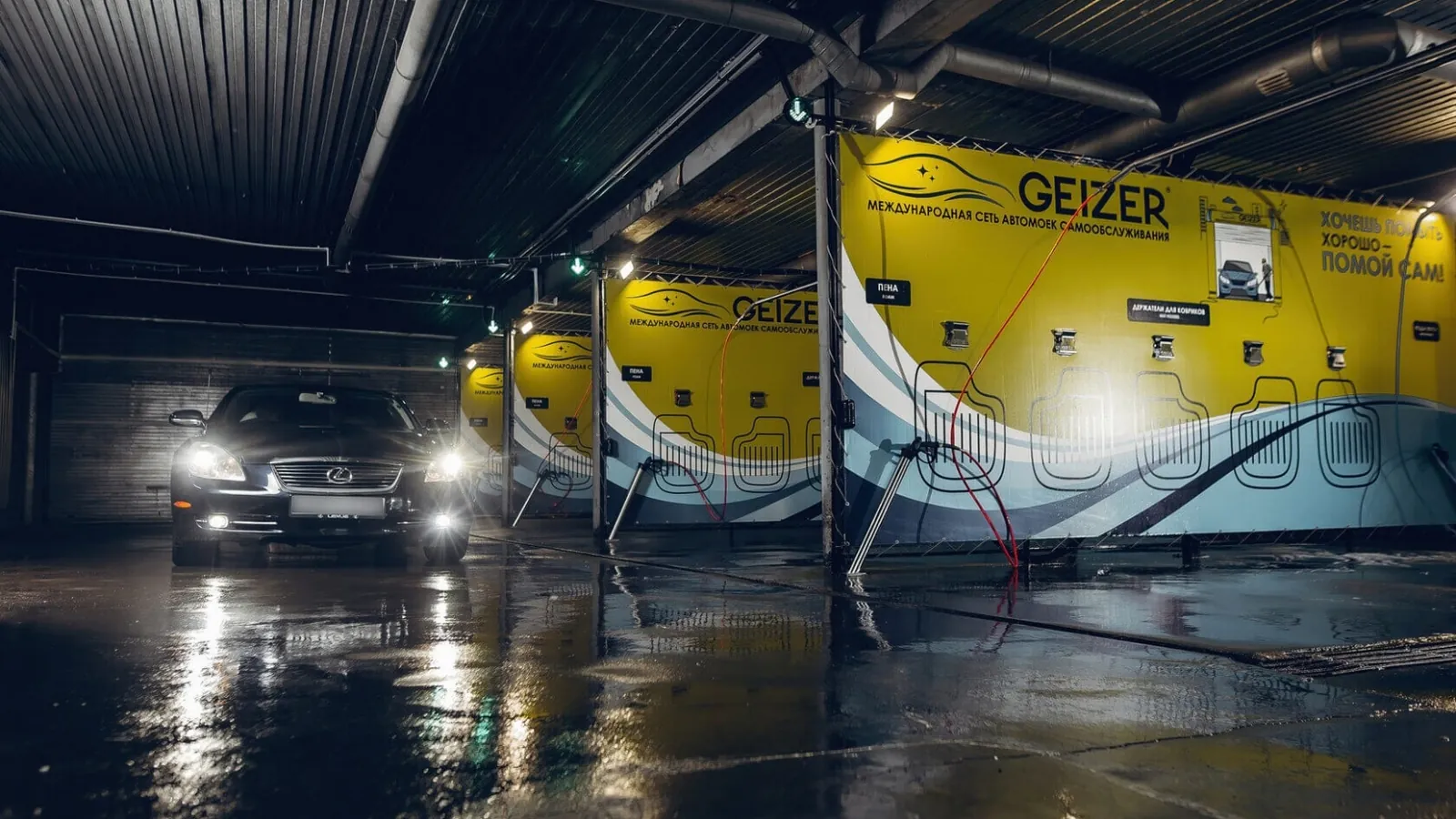
Customers wash themselves and pay at the bay by card, SBP or QR. Owners monitor bay revenue, utilization and faults on a phone and change prices and promotions remotely. Someone handles grounds cleaning, chemical refills and minor jobs, making this a low-staff business rather than passive income. More in Myths and reality.
Network traffic ranges from 20 to 120 cars per day per bay, depending on location. There is no universal payback figure: from 6 months is the best case at high utilization, not the typical outcome.
If you do not need the network, buy equipment directly from manufacturing from 430,000 ₽ per bay. Gains and tradeoffs are explained in franchise or equipment.
Where to begin
Choose a sector you understand and shortlist several franchises. Ask each the seven questions in writing, visit operating sites, then compare prices. The cheapest is not necessarily worthwhile, and the most expensive is not necessarily reliable.
For self-service washes, begin with figures for your city. In the calculator enter bays, traffic and average transaction and see what figures make the project viable. This answers question six before you sign anything.
Frequently asked questions
How do I choose a franchise without losing my investment?
Ask seven questions in writing: initial fee, royalties, price inclusions, operating sites, service and parts, projections for your city and exit terms. Visit at least one operating location and speak to its owner. Decide using written answers rather than a presentation.
How does a franchise differ from buying an existing business?
An existing business is a specific operating site with revenue history supplied by its seller. A franchise is a system: brand, model, supplies, training and support. You open the location under network rules and pay for the system through an initial fee, royalties or both.
What are an initial franchise fee and royalties?
The initial fee is a one-off payment to join. Royalties recur as a revenue percentage or fixed amount. Understand what the network provides for each and when payments begin.
Which franchises are worthwhile in 2026?
There is no universal list: quality depends on answers to due-diligence questions, not sector. Good signs include operating sites you can visit, location-specific projections and a contract available before payment. Guaranteed income and pressure to decide are poor signs.
What indicates an empty franchise offer?
No operating addresses, no contract before payment, pressure through discounts, guaranteed income or typical payback without site analysis. Payments before opening and mandatory purchases without contractual prices are also concerning.
What are available franchises?
Franchises currently for sale, with franchisors seeking partners and accepting inquiries. Directories collect them, but the franchisor usually writes its own listing, so figures are seller claims rather than verified data. Apply the same checks as to any franchise.
How does buying a franchise work?
First inquire and receive terms, then request a sample contract and operating-site addresses. Check seven questions, select and assess a location, then sign and launch. Pay only after reading the entire contract and finding every verbal promise in it.
Which franchise suits someone without time for daily operation?
Consider low-staff formats based on equipment and self-service. Low staffing does not mean no involvement: the owner remains responsible for location, consumables, breakdowns and records. Phone management reduces visits, but decisions remain yours.