
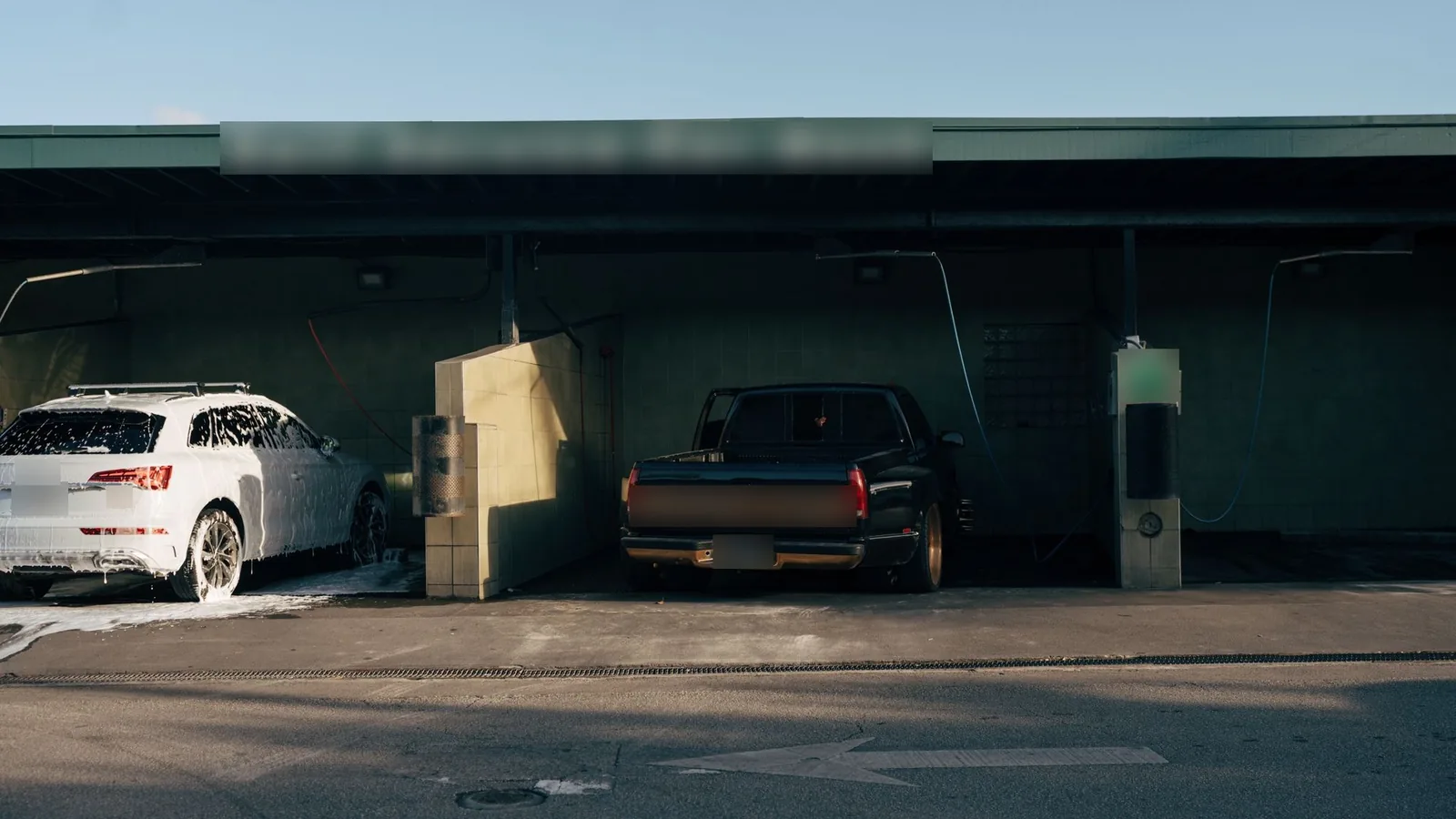
Operating or new wash: the difference
“Car wash business for sale” listings promise no waiting. You need not find land, approve connections, build or wait for drivers to discover it. It already operates with regular customers and a sales history. This is a real advantage and why buyers choose existing washes.
The other side: you design a new wash for yourself; an existing one includes all the previous owner's decisions and mistakes. Poor location, short lease, tired pumps and unpaid bills arrive with the sign.
Ask not “what does an existing wash cost?” but “what will it cost to make it operate properly, and what does it really earn?” Documents and inspection answer that, not the listing text.
Why owners sell car washes
Selling is not inherently a bad sign. Owners may relocate, fund another project, disagree with partners or keep only convenient sites from a larger portfolio. In such cases sellers usually show figures calmly without rushing you.
Other signals should concern you:
- A competitor has opened nearby or will open soon. Ask directly and verify: check maps, drive around and look for construction with canopies.
- The road is changing. Repairs, a new interchange, a relocated entrance or road closure can remove the supporting traffic in one season.
- The lease is expiringand the landowner will not promise renewal or is increasing rent.
- Equipment needs costly repair. Selling “as is” is easier than paying for pumps and heating replacements.
- Urgency. “There is already a buyer; decide before the weekend” is a reason to slow down, not speed up.
Ask why the seller is selling and compare the answer with your findings. If the story conflicts with documents, trust documents.
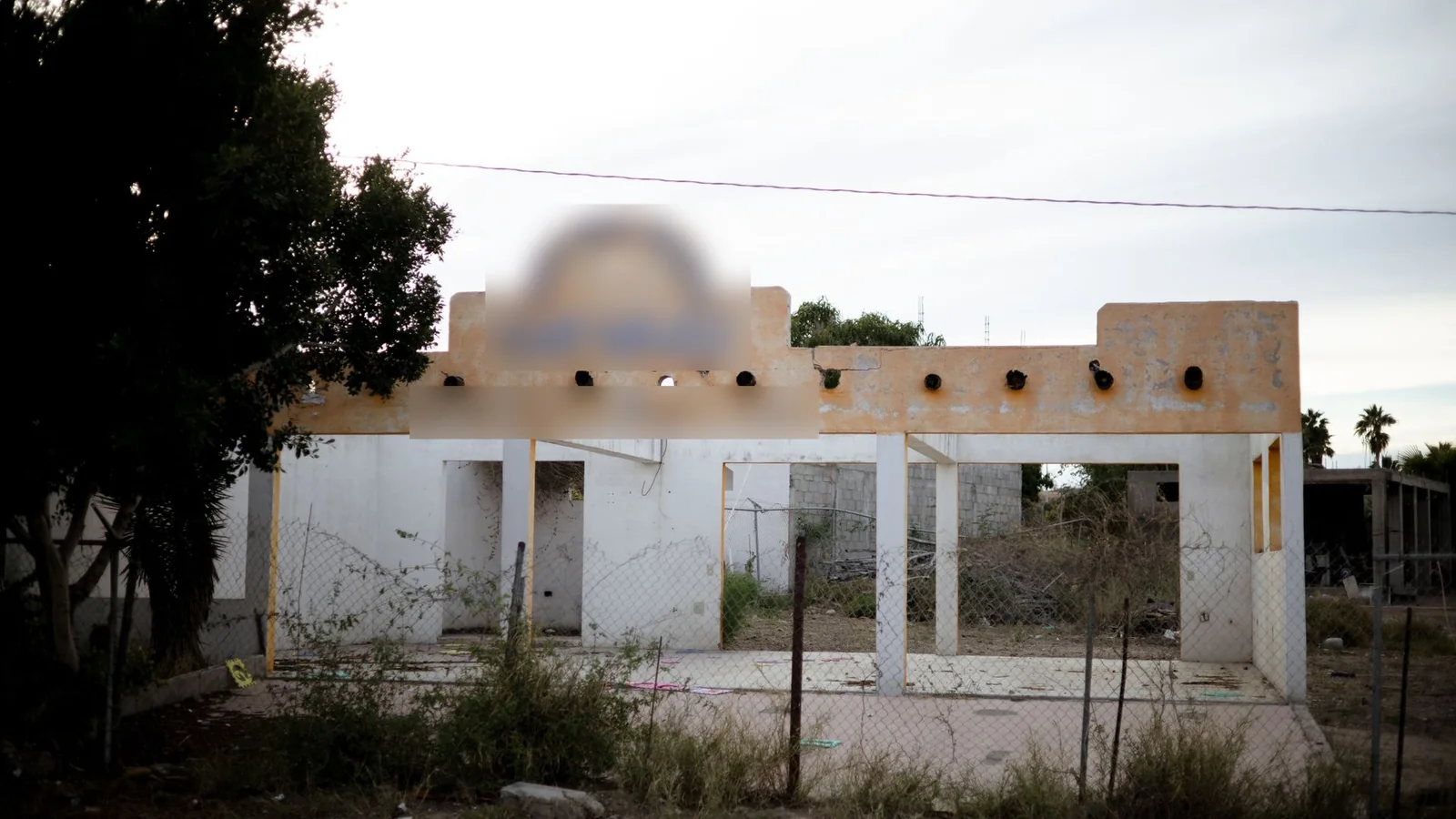
Verifying revenue: exports, not words
The main risk is buying an attractive listing figure. A self-service wash helps verification because almost every rouble passes through equipment: bay terminals, bank acquiring and the online cash register. Revenue can therefore be checked against data difficult for the seller to alter.
- Bank acquiring reports. Cashless payments monthly for at least a year. Ask the seller to export them from online banking in your presence, not provide a printout.
- Terminal and management-system data. Revenue by bay and hour. If one bay earns much less, investigate faults, awkward access or long downtime.
- Online cash-register receipts. The fiscal-data operator shows all issued receipts, including cash.
- Expense reconciliation. Water, electricity and chemicals rise with car numbers. If reported revenue rises without water bills increasing, recheck the figures.
Examine at least twelve consecutive months, preferably two years. Washing is seasonal; three successful spring months can easily be presented as normal. Compare the same months across years to see traffic growth, stability or decline.
If the seller claims unregistered cash makes actual revenue higher than reports, count only reports. Unverifiable figures do not belong in the price.
Once revenue is verified, subtract actual rent, utility, chemical, repair, cleaning and tax costs. Wash economics and why market averages tell you nothing about one site are explained in the article how much a wash earns.
Traffic and location: check yourself
The existing wash's location cannot be changed. Assess it as strictly as land for a new wash.
- Observe at different times. A weekday evening, weekend and morning. Count arriving cars and queues; compare reports for the same weekday.
- Check entry. Is turning off the road easy, does it require crossing a solid line, and is there room for waiting cars?
- Check surroundings. Housing, shops, commuting and country-house routes. Ask local authorities about planned road works or rerouting.
- Count competitors. How many washes are within several minutes' drive, with what prices and reviews?
For scale, GEIZER bays see 20 to 120 cars per day. The enormous spread is determined by location. A strong location may still lose customers through faults and dirt; such a wash can sometimes be improved.
Land and leases: what the wash stands on
A wash includes the right to occupy the location, not just equipment. Without it you buy pumps that must be moved.
- Who owns the land? Check the EGRN extract for owner, permitted use, encumbrances and seizures.
- If land is leased check remaining years, renewal, transferability to the new owner and the landowner's view. Speak to them personally before the deal.
- Building status. Are the canopy and technical room documented permanent buildings or temporary structures? This determines what you buy and demolition risk.
- Permitted use. The plot must allow a wash; otherwise the first inspection may raise questions for you.
Equipment wear: pumps, heating, reverse osmosis, terminals
After land, equipment is the most expensive part and is often described as “everything works”. Working does not mean good condition. Bring an independent specialist, not the seller's technician.

- High-pressure pumps. Check pressure at all bays simultaneously, leaks, knocking and oil on the frame. Ask when serviced and seals replaced, with evidence.
- Heating and frost protection. Boiler, water heating and pipe/gun freeze protection. If shown in summer, ask about the previous winter and downtime.
- Reverse osmosis and water treatment. When were membranes and filters replaced, and is there a softener? Limescale on tiles, nozzles and rinsed windows suggests a water issue. Read more in the article about reverse osmosis and wash water.
- Payment terminals. Do they accept cards, SBP and QR, receive software updates and provide remote revenue access? Old coin-and-note-only terminals deter customers.
- Hoses, guns, swivel booms and vacuums. Small items, but frequently replaced and revealing how the wash was maintained.

Most importantly, who made it and are parts still available? If the factory closed or equipment mixes undocumented components, every repair becomes a search. Essential components are discussed in the article self-service car wash equipment, and common breakdown causes in the article about wash servicing.
Documents, electricity, water and wastewater
A wash consumes much water and power and discharges dirty water. All must be documented, or issues emerge at the first inspection or accident.
- Electricity. Connection agreement and allocated capacity sufficient for all bays with heating in frost. A site at its limit cannot expand without a new connection.
- Water. Municipal supply under contract or a well? Wells have their own documents and requirements.
- Wastewater. Does dirty water go to contracted sewerage, a septic system or treatment? Is there a sand trap and how often is it cleaned? Untreated discharge can lead to fines.
- Permits and design. Construction and commissioning documents where required, and consistency between what was built and documented.
GEIZER offers a separate service for assessing premises, documents and utilities: premises assessment assistance.
Staff and hidden debts
Self-service washes need almost no staff, but someone cleans, loads chemicals and monitors bays. Find out who does this, whether formally employed and whether they stay after sale. If the owner handled everything, you must do it or hire someone.
Check debts beforehand through public sources, not promises.
- Buying the company or its assets. Buying the entire Russian limited liability company (OOO) also transfers its tax, supplier and bank debts. Buying equipment and lease rights separately is usually safer, but agreements must be reissued.
- Litigation and enforcement proceedings. Check the seller in the arbitration case database and FSSP enforcement database.
- Pledges and leasing. Equipment may be leased or pledged to a bank. Movable-property pledges appear in the notarial chamber's pledge-notice register.
- Utility and rent arrears. Request certificates showing no water, electricity or rent debt.
Entrust the legal deal, contract, lease transfer and settlement to a lawyer. Saving here can cost the most.
Pre-purchase checklist
If even one item lacks an answer, it need not mean refusal, but is a reason to lower the price or postpone the deal.
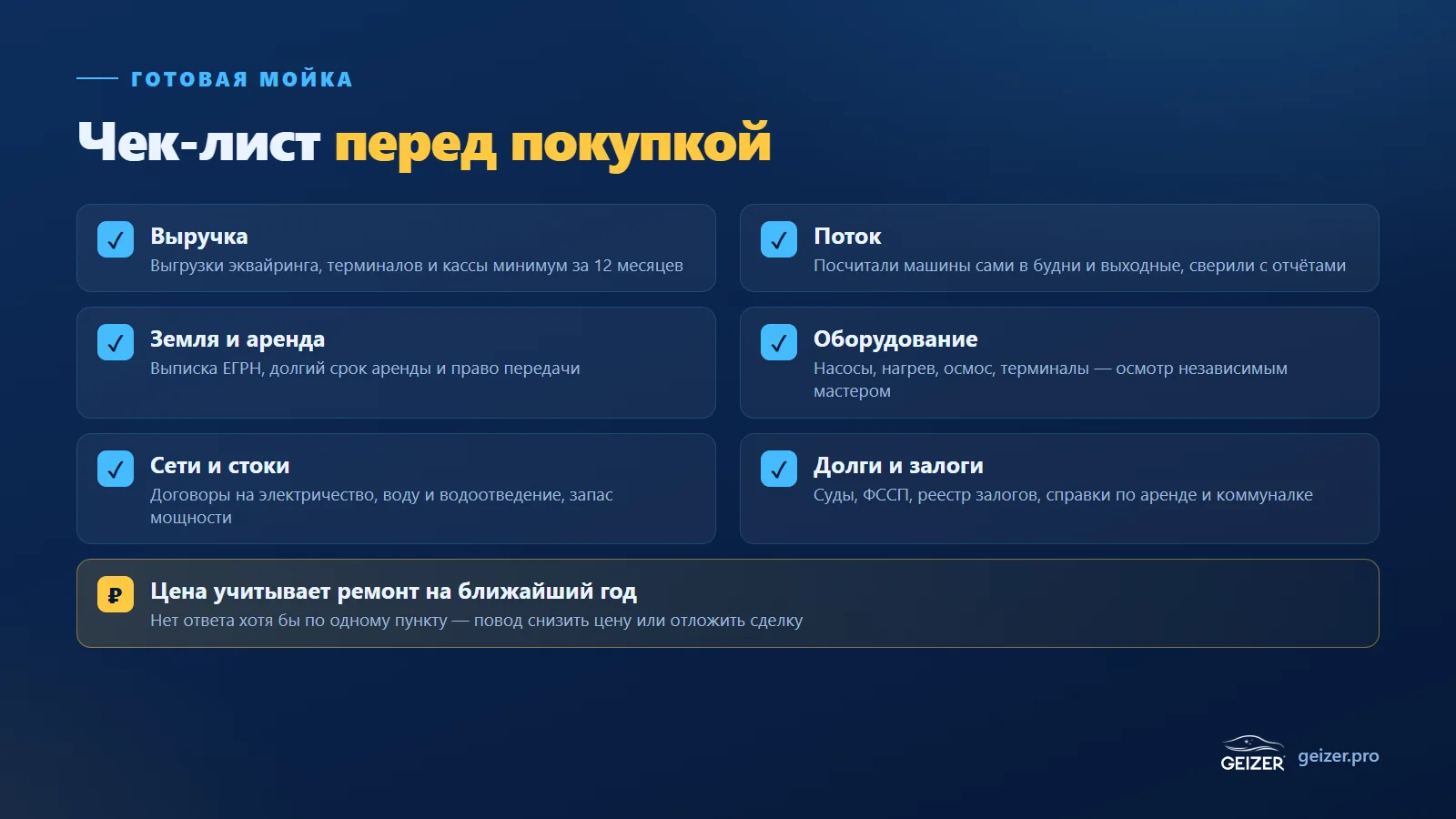
- Revenue verified by acquiring, terminal and cash-register exports for at least a year.
- Traffic counted personally on different days and matching reports.
- Land owned or held under a long, transferable lease.
- Equipment inspected independently, with parts available.
- Electricity, water and wastewater covered by agreements, with sufficient capacity.
- Debts, pledges and litigation absent, with certificates in hand.
- Price allows for repairs needed in the next year.
When to build new or choose a franchise
An existing wash wins with strong location, sound documents and a wear-adjusted price. A new wash is more sensible in some cases:
- Mediocre location. It cannot change, while a new wash can be placed where traffic exists.
- Equipment near end of life. If pumps, heating and terminals must all be replaced, you pay for signage and concrete, then again for machinery.
- Short lease or a landowner opposing transfer.
- Wanting more baysbut lacking land or electrical capacity.
A new wash takes construction and launch time but starts clean: new warranted equipment, your chosen location and no inherited debts. Open with 1 to 6 bays. BRIZ equipment for GEIZER has been manufactured in Barnaul since 2015 and operates from −35 to +35 °C. The franchise starts at 450 000 ₽ per bay including delivery, installation, commissioning and training, with no initial fee and 5% royalties only on operating revenue. Site, connections, canopy and paperwork are separate after inspection.
The network has 199 partner-owned washes in 69 cities. Support operates 24/7 with remote diagnostics and a 12-month equipment warranty. Owners see bay revenue and faults on the phone dashboard.
If unsure whether to buy or build, compare both at the same traffic figures. Franchise versus equipment-only purchasing is explained in the article franchise or equipment, and a preliminary new-wash model is available in the calculator on the franchise page.
Frequently asked questions
Is buying an operating car wash worthwhile?
Yes, if the location is strong, revenue documented, land rights secure long term and price reflects equipment wear. If any of these is uncertain, compare the purchase with a new wash at the same traffic level.
How do you verify an operating wash's revenue?
Use bank acquiring exports, bay-level terminal and management-system data and online cash-register receipts for at least twelve months. Compare revenue with water, electricity and chemical use. Do not include the seller's claims of off-register cash in the price.
Why do owners sell washes?
Ordinary reasons include relocation, funding another project or splitting a partnership. Warning signs include a new nearby competitor, road works or rerouting, an expiring lease, costly equipment repairs and pressure to close quickly.
What should you check in self-service equipment before buying?
High-pressure pump pressure and leaks, heating and frost protection, reverse-osmosis membranes and filters, and terminals accepting cards, SBP and QR. Identify the manufacturer and parts availability. Prefer an independent specialist's inspection.
What documents are needed when buying an operating wash?
A land extract from Russia's EGRN property register, a transferable lease, building documents, electricity, water and wastewater agreements, and debt-clearance certificates. Check the seller in the arbitration case database, FSSP enforcement database and pledge register.
Which is safer: buying the company with the wash or only its assets?
Buying the Russian limited liability company (OOO) also transfers all its debts and obligations. Buying equipment and lease rights separately is usually safer, but land and utility agreements must be reissued. Handle the deal with a lawyer.
When is building a new wash better than buying an existing one?
When the location is weak, equipment needs replacement anyway, the lease is short or the plot cannot accommodate more bays. A new wash takes longer to launch, but you choose the location and get new warranted equipment without someone else's debts.
How much does a new self-service wash cost for comparison?
The GEIZER franchise starts at 450 000 ₽ per bay including delivery, installation, commissioning and training. There is no initial fee; 5% royalties apply to an operating wash's revenue. Site, connections, canopy and paperwork are calculated separately after inspection.