

Passive income: what the words really mean
“Passive income” is searched even more often than “where to invest money”, and there is a trap in that wording. “Passive” promises money without involvement, which does not exist. Even the calmest option leaves decisions to you: where to put money, when to withdraw it and what to do if terms change.
Rather than passive versus active income, think of an involvement scale. At one end are investments requiring selection and occasional checking; at the other, a business where you are on site every day. Many options lie between.
Reframe “where to invest money in 2026” as how much time and attention you can invest with the money, and what risk you will accept. Everyone's answer differs. This article organises the options; it is not investment advice.
Deposit, apartment or business: passive-income options by involvement
People most often choose between a deposit, rental apartment and their own business. Comparing promised returns makes little sense: terms change and business income is not fixed. Three things are more useful: required involvement, income drivers and what could go wrong.

- Deposit. The least involvement: open it, select the term and remember maturity. The bank's terms determine income, and you cannot influence them. Risks include money losing purchasing power over time and usually losing some income on early withdrawal.
- Rental apartment. Involvement is occasional but uneven: finding tenants, viewings, contracts, repairs after move-out, breakdowns and utility issues. Income depends on neighbourhood, condition and vacancy time. Recovering the money quickly is difficult because selling takes time.
- Your own business. Involvement always exists, but its amount depends greatly on the format. Income has neither an upper cap nor a protected floor: location, demand and your decisions determine it. Risk is higher than in the first two options; accept that before investing, not afterwards.
No option is inherently best. Deposits suit those who value predictability; apartments suit people ready for occasional practical issues; business suits those willing to take risks for income dependent on their own decisions.
Passive income beyond deposits and apartments
Deposits, apartments and business are common answers but not the only ones. Compare other options using the same criteria: involvement, risk and how quickly you can recover the money.
- Bonds. You essentially lend to a government or company and receive income. Involvement is limited to choosing an issue and tracking dates. Risk depends on the borrower: if it cannot pay, you may lose some money. Bonds can usually be sold before maturity, but the price may then be below the purchase price.
- Shares and funds. You become a co-owner of one company or many. Income comes from price appreciation and distributions, if made. Involvement is low, but patience is needed: prices change continually and may fall below the purchase price at an unfortunate time. Neither income nor preservation of principal is guaranteed.
- Rental commercial premises. Similar to an apartment, but the tenant is a business. If it leaves, the space is vacant until a new tenant is found, and quickly recovering the money is difficult.
- A stake in someone else's business. You fund an acquaintance or partner and receive part of the profit. Involvement is minimal, but so is control: you know only what you are told. Without a contract specifying your share, reporting and exit procedure, this is hope in someone's honesty rather than an investment.
- Your own low-involvement business. A format where equipment, not people, does most of the work. Involvement is lower than in a conventional business, but risk and responsibility remain entirely yours. More below.
As a rule, the less you are required to do, the less you can influence the result. You can pay little attention to a fund or another person's business, but cannot fix things there either. Your own business is the reverse: more work, but your decisions.
Where to invest for passive income: three questions before choosing
Before comparing specific offers, answer three questions. They eliminate unsuitable options faster than any calculation.
- How many hours per week can you spend? If the answer is “almost none”, a business needing daily attendance is unsuitable, however attractive the presentation.
- When might you need the money? Money invested in property or business is difficult to recover quickly. If you may need it soon, that matters more than any return.
- Which outcome can you tolerate calmly? Consider the worst scenario, not the best. If losing some capital would cost you sleep, start with options where that is unlikely.
Only then look at figures. They should reflect your city, amount and schedule, not averages from other people's success stories.
Investing in 2026: first the process, then the options
Searches for “where to invest in 2026” often return lists of the year's best investments. But the year in a headline changes little: rates, prices and terms also change within a year, and a decision resting only on today's conditions is fragile. Following a process is more reliable than guessing the best option.
- Reserve first. Before investing long term, keep an emergency sum where you can withdraw it quickly. Otherwise the first urgent expense may force withdrawal at a bad time and a loss.
- Not everything in one place. A substantial amount can be split among options with different risks and involvement. Failure in one then does not wipe out the rest.
- Be cautious with borrowed money. Borrowing to invest adds a mandatory payment regardless of performance. If borrowing, check whether you can afford it with modest results, not the best case.
- Only what you understand. If you cannot explain in your own words where the income comes from, investigate before investing rather than afterwards.
These rules do not depend on the year: figures change, the process does not. This is not personalised investment advice; you decide how to allocate your money.
How to avoid losing money in pursuit of passive income
Alongside legitimate passive-income options are offers designed to take your money. Several signs help distinguish them.
- Guaranteed high income. Income supposedly independent of the market, location and your decisions warrants caution. A legitimate offer discusses risk before profit.
- “You do not have to do anything.” Passive income without involvement does not exist. Anyone claiming otherwise is selling a promise rather than an investment.
- Time pressure. “Places are running out” and “terms only until the end of the week” rush you so there is no time to check.
- Income for new participants. If earnings depend mainly on how many people you recruit rather than a real business's operations, that is a pyramid-scheme warning sign.
- No clear contract. Responsibility for your money, what you receive and how to exit must all be written down. Verbal promises do not protect you.
Ask us the same questions. Below are answers on wash costs, what royalties pay for and why we do not state a universal payback period.
Which business needs the least owner involvement?
If you favour your own business but lack time for daily work, examine the workload. Three things consume the most involvement: staff, buying and selling merchandise, and personally serving every customer.
A shop needs salespeople and purchasing, a café cooks and shifts, and a service business technicians and appointments. A manager can handle these, but then you manage the manager, which is also work.
Formats where customers serve themselves and equipment accepts payment require less involvement. There is almost no staff, no merchandise stock and no sales conversation. The owner's work shifts from processes to oversight: monitoring figures, servicing equipment on time and keeping the site orderly.
A self-service wash is a clear example. Read more in the article “Self-service car wash as a business”.

Self-service wash: how much involvement is actually needed
Customers arrive, wash their cars and pay at the bay by card, SBP or QR. There is no cashier. But it is not effortless: someone must clean the site, load chemicals and do minor tasks. The hours required depend on bay count and traffic.
The owner does the rest by phone. The account dashboard shows bay revenue, utilisation and peak hours, with fault alerts arriving before customers complain. Prices and promotions change remotely and several sites are combined in one system. The article explains how it works about managing a wash online. Technical needs are covered by 24/7 support, remote diagnostics and a 12-month equipment warranty.
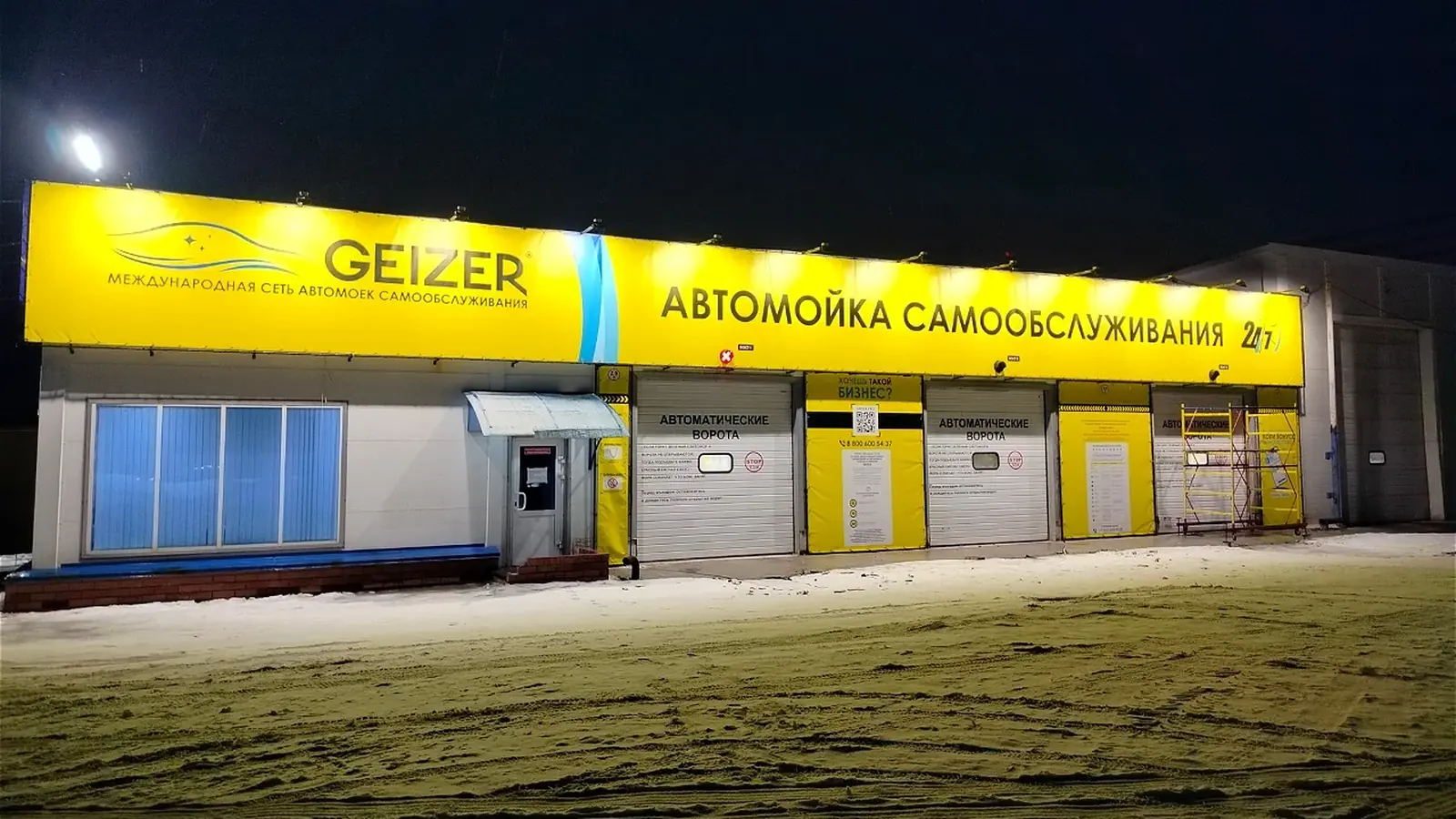
Involvement is lower than in a café or shop, but it exists. These responsibilities remain with the owner even with an on-site helper and phone-based management:
- Location. The site contract, landlord and neighbour relationships, and site order. No equipment can fix a poor location.
- Chemicals and consumables. Order ahead so an empty canister does not stop a bay.
- Breakdowns. The phone receives a fault alert and support helps identify the cause. The owner decides whether to call a technician, replace a part or close a bay for repairs.
- Accounting. Revenue, expenses, taxes and payment to the on-site worker. The dashboard shows figures; you draw conclusions.
A wash opens with 1 to 6 bays. BRIZ bay equipment starts at 430 000 ₽ from the factory; the GEIZER franchise starts at 450 000 ₽ per bay including delivery, installation, commissioning and training. Site preparation, connections, canopy, signage and paperwork are calculated separately after inspection. There is no initial franchise fee; 5% royalties apply only to an operating wash's revenue.
Network traffic ranges from 20 to 120 cars per day per bay, with location determining the spread. The calculator uses an average transaction range of 180–400 ₽.
2 bays × 40 cars per day × 250 ₽ × 30 days = 600 000 ₽ monthly revenue. Site expenses for chemicals, water, electricity, cleaning and maintenance are about 35%, or 210 000 ₽. Royalties at 5% are 30 000 ₽. That leaves 360 000 ₽ before rent, taxes, wages and loan payments. A different location and traffic produce a different result.
There is no single network-wide payback figure: it depends on location and utilisation, and promising a period without examining the specific site is dishonest. Practical expectations are explained in the article “Car wash as passive income: myths and reality”.
How to test an idea before investing money
Before investing, test any business using figures for the specific location. For self-service washing, check traffic, competitors and nearby housing, verify the site and documents, and establish how many bays the location can really sustain.
We perform this check with the partner before launch. Production in Barnaul has operated since 2015; the network has 147 partners and 199 washes in 69 cities, giving us comparisons for your city. Existing washes are shown on the network cities page, and you can estimate your figures with the income calculator.
A general rule applies to every option in this article: decide using a cautious scenario. If an investment works for you with modest results, it fits. If only with the best results, look for another.
Frequently asked questions
Where should you invest money in 2026?
There is no universal answer: it depends on the time you can spend, when you may need the money and how much risk you can tolerate. Deposits require the least involvement, rental apartments occasional involvement, and a business ongoing involvement. This is a way to compare options, not investment advice.
Where can you invest for passive income?
Where involvement and risk fit your capacity. With almost no time, consider deposits, bonds and funds: involvement is low but you cannot influence the outcome. If ready for risk and oversight, consider a low-involvement business where equipment does most of the work. This is not personalised investment advice.
Where should you start if you want passive income?
Start with a readily accessible emergency reserve; invest long term after establishing it. Then honestly assess your available time, when you might need the money and the worst outcome you can tolerate. Only then choose and test an option using your own figures, not other people's success stories.
How can you distinguish a scam from legitimate passive income?
Warning signs include guaranteed high income, promises of no work, time pressure and rewards for recruiting people. A legitimate offer discusses risks first and explains the real activity generating income. Every promise should appear in the contract.
Can passive income exist without involvement?
No. Even the calmest investment involves owner decisions. It is more useful to ask how much involvement each option needs and whether you are ready to provide it.
What passive-income options exist?
Common choices are deposits, rental apartments and owning a business. They differ in owner involvement, income drivers and risks. Among businesses, formats where customers serve themselves and equipment accepts payment need less involvement.
Which business needs the least owner involvement?
One with almost no staff, merchandise purchasing or personal work with every customer. A self-service wash is an example: customers wash and pay at the bay, while owners monitor revenue and faults on a phone. Someone is still needed on site for cleaning, loading chemicals and minor tasks.
Is a self-service car wash passive income?
No, but owner involvement is limited to oversight, chemicals and cleaning. Income depends on location and traffic; there is no single network-wide payback figure. Any pre-opening calculation is preliminary and does not guarantee income.