
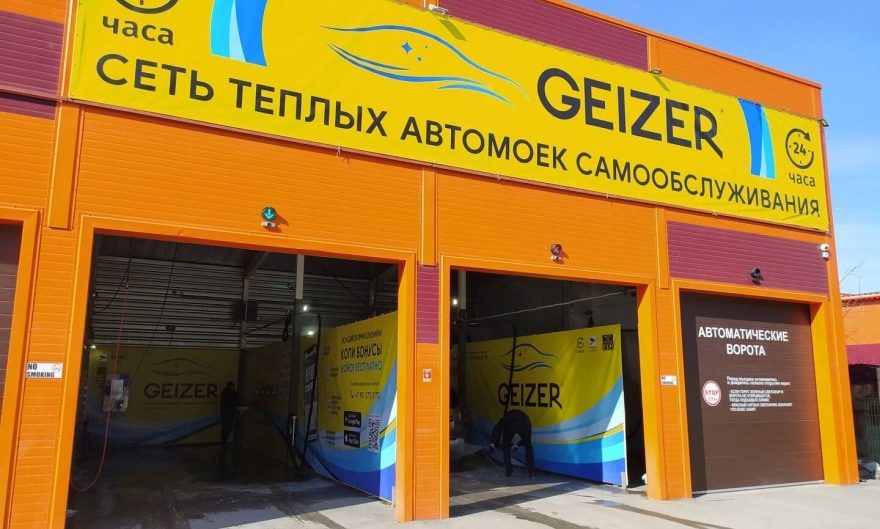
In short: the format works confidently from roughly 20,000–30,000 residents, but the size of the town is a crude first filter and no more. What decides it is the flow of cars past the specific plot and the utilisation of neighbouring bays at peak times. Frost does not rule a region out: the station works down to −35 °C, and the climate affects the budget, not the possibility.
Why the choice of town matters more than the choice of equipment
A self-service car wash earns from flow — the number of cars that drive past and decide to pull in. Even a premium station with the full set of functions will not create demand where there physically is none: few residents, few cars or an awkward approach. And the other way round — a simple configuration on a busy road into town can reach its flow faster, but that too is a calculation for a specific spot, not a rule. So the choice of town and plot is not a formality before the budget but the decision that sets the economics of the site for years ahead.
Where the assessment of a town starts
No single item works on its own. A city with a large population but a saturated car wash market can be worse than a small town with no competitors on the road into it. You have to look at the combination of factors, not at one indicator.
Population and car fleet: from what size of town the format works
Total population is a crude first filter, no more than that. The self-service format works confidently from roughly 20,000–30,000 residents given good traffic next to the site, but in a town of 15,000 on a busy transit road the flow can be higher than in a residential district of a city of 100,000 with no through traffic. Count not “how many people live in the town” but “how many cars actually pass this particular spot during the day” — those are two different numbers.
In towns with high migration and rotational work the daytime number of cars noticeably exceeds what the official population would suggest. For industrial and logistics towns this is often an advantage that directories do not show.
Competitors: count utilisation, not numbers
It is a mistake to compare towns by the formula “so many car washes per thousand residents”. What matters far more is the actual utilisation of existing bays at peak times. If competitors near your potential plot have a queue at the weekend, the market is not saturated, demand exceeds supply, and a new site will fit into the existing flow. If competitors' bays are free even on a Friday evening, opening nearby is risky no matter how many “car washes per district” there formally are.
A practical way to check: visit competitors at different times — a weekday afternoon, Friday evening, the weekend — and simply count the cars in the queue and the occupied bays. It is cheaper and more honest than any desk research.
Traffic and visibility of the plot
Two towns with the same population produce different revenue because of where the specific plot sits. The signs of a good location are these:
A plot tucked away in a courtyard with a good rent almost always loses to a more expensive spot on a main road — saving on rent does not repay the lost traffic.
Climate: not a reason to drop a town, but a factor in the budget
A heated GEIZER self-service car wash is designed to work down to −35 °C, so a cold climate does not rule a region out. But it affects two things: the cost of heating the bays and the pipework in winter, and the seasonality of demand. In most cold regions winter is not a slump but a peak: cars get dirtier from road salt and grime than in summer, and their owners wash them more often. GEIZER has a separate look at how winter operation works — why it is a season of demand, not of downtime.
Utilities: apply before you start looking for premises
While you are at it, look at which towns GEIZER car washes already work in: if yours is not on the list, the area is free. Electrical capacity and access to water often turn out to be the longest and most expensive line in the budget — longer than installing the equipment. Before you commit to a plot, ask the local utilities for the real timescales and cost of connecting the capacity you need: in some towns it takes weeks, in others months and a separate design project. The difference in timing moves the opening date and the payback point directly.
Residential district or main road: the typical beginner's mistake
A common beginner's logic: “the site will be closer to home, I will keep an eye on it myself”. A residential district really is easier to supervise, but residential districts give the most capricious traffic — a peak on weekday evenings and an almost empty site during the day and in the first half of the weekend. On a main approach road the flow is spread more evenly through the day: in the morning people drive to work and stop off for a wash, during the day there is through traffic and lorries, in the evening people drive home. Revenue on a main road is almost always higher for comparable rent, and the autonomy of GEIZER equipment (95% of operations without staff) removes the main argument for “I need to be nearby” — the site can be monitored remotely from the owner's account whatever the distance.
Resort and industrial towns: where demand is higher than it looks on paper
Resort and tourist towns give a sharp seasonal peak — traffic over three or four summer months can be several times the winter figure, and that has to go into the financial model separately rather than be averaged over the year. Industrial towns and settlements with rotational work, by contrast, are often underrated: the official population does not count rotational workers and visiting employees, who generate steady daily traffic of both lorries and cars. Such towns rarely make the shortlist in a superficial “look it up in a directory” analysis, yet in practice they give a stable flow all year round.
How to check a town yourself in one day
You do not have to commission expensive research to get a first honest assessment. A practical route for one day on site:
That is enough to weed out obviously weak locations before signing a lease. A financial model for the specific site, not for an average town — for a specific town and plot you can get one free of charge from the GEIZER team.
How to compare several towns with each other
If you are looking at several towns or districts at once, put together one table for each: population and an estimate of the car fleet, the number and utilisation of competitors, a description of the best available plot (traffic, visibility, rent), the climate zone, and rough timescales for utility connections. After that the comparison stops being a question of “which one I like more” and becomes a calculation with clear figures for every option.
Calculate income and payback for a specific town →Frequently asked questions
What is the minimum size of town suitable for a self-service car wash?
The format works well from roughly 20,000–30,000 residents given dense car traffic next to the site. What matters more than the town's total population is the number of cars that actually pass the plot every day.
How many competitors is too many for one town?
There is no single figure: two bays for a district with heavy traffic is too few, while the same format in a residential district with one road is already too much. Look not at the number of car washes in the town but at the utilisation of specific bays at peak times near your plot.
Do you have to open in a regional capital?
No. The GEIZER network has many sites in district centres and small towns — rent there is often lower and there is less competition with a comparable flow of cars on the approach roads.
How should climate be taken into account when choosing a town?
A heated GEIZER self-service car wash works down to −35 °C, so the climate does not rule a region out but affects the budget: in cold towns the cost of heating the bays and the pipework in winter is higher.
Is it better to open near home or on a main road at the other end of town?
A main road with traffic spread evenly through the day is usually better than a residential district near your home. The autonomy of GEIZER equipment (95% of operations without staff) removes the need to be there in person — the site can be run remotely from the owner's account.
Is it worth opening in a resort or an industrial town?
Yes, but with different caveats. In resort towns the traffic is strongly seasonal — that has to go into the financial model month by month. In industrial towns and rotational settlements the actual car fleet is often larger than the official population suggests, and such towns undeservedly rarely make the shortlist in a superficial analysis.