
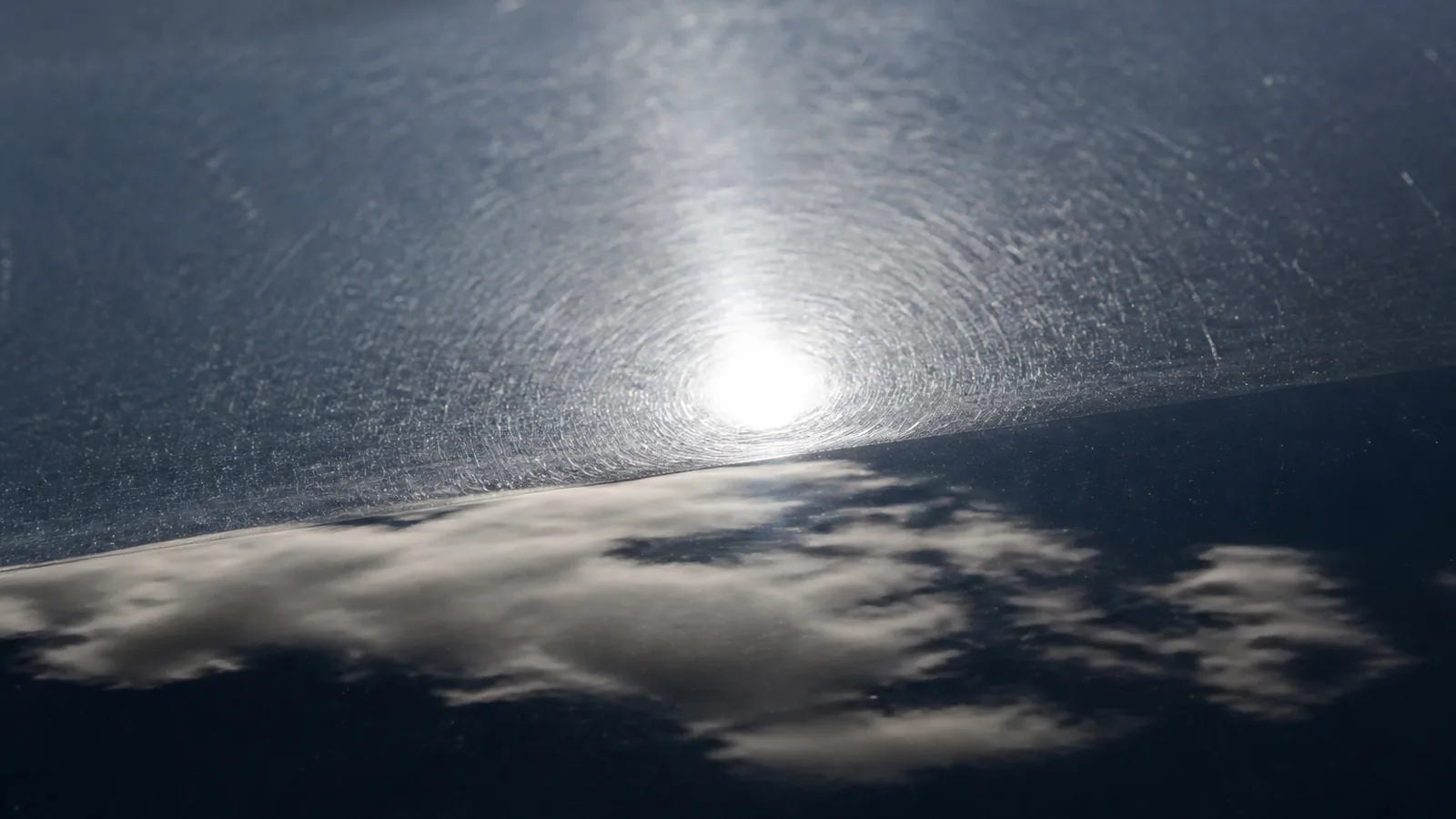
Why the same scratches are visible only on a dark car
A common misconception: black cars have a softer clear coat that scratches more easily. They do not — within one model the clear coat is the same in every colour.
It comes down to optics. A light clear coat scatters light: a fine scratch reflects it in all directions and disappears against the background. A dark clear coat works like a mirror — it reflects directionally, and every scratch becomes a separate bright line on a dark field. The same goes for a dried drop: on a silver car its outline is barely readable, on a black one it is white and visible from several metres away.
The practical conclusion is unwelcome but useful: a dark car shows the consequences of every mistake that a light one forgives. Which means the mistakes simply must not be made.
Where swirl marks come from
The web of fine curved scratches you see in the sun and under street lights is not wear and not “the way the paint is”. It is mechanical damage, and it has three sources.
A brush on a half-washed body. The fastest way to do damage. The brush in the bay is shared: sand from the previous car stays in its bristles. Run it over a body that still carries its own dirt and you get an abrasive from both sides at once.
A cloth. Especially one that has been dropped on the ground or kept in the boot. And especially in circular motions — hence the characteristic web of arcs.
Wiping it dry. Brushing dust off a dry body with a cloth is the same as going over it with fine sandpaper.
Swirl marks cannot be washed away any more, only polished out — and polishing removes a layer of clear coat, which you cannot repeat forever. So it is cheaper not to create them.
The order for a dark car
There are few differences from an ordinary wash, but each one matters.
In the shade only, never in blazing sun. On a dark body this matters twice as much: a black surface heats up more, and water and foam dry on it faster than you can rinse them off.
Spend longer knocking the dirt off with water. Before anything solid touches the body, there must be no sand left on it.
Give the foam its full dwell time. One to three minutes. The temptation to cut it short and “finish by hand” ends exactly as described above.
Do not take the brush at all. On a dark car the gain from it is smaller than the risk. If you do take it, use it only on a body that is already washed and only after rinsing the brush with water.
Wax is a must. On a dark clear coat drying wax gives the most visible effect and at the same time reduces the amount of water left to dry.
Dry with the air blower, not with a cloth. This is the most important point on the list.
Streaks: two different causes that get confused
Whitish marks on a dark car after a wash come from two different causes, and the cures are different.
The first is salts from the water. The water evaporated and the calcium and magnesium dissolved in it stayed on the clear coat as the outline of a drop. Cured by a final rinse with osmosis water and drying with the air blower. In detail in the article about osmosis and water.
The second is dried chemistry. The foam or the wax dried on the body before it was rinsed off. No osmosis water helps here, because the cause is different: you washed in the sun or stretched the pause too long.
They are easy to tell apart. Marks from salts follow the shape of drops and runs. Marks from dried chemistry are streaks, usually where the foam landed first and sat the longest.
Frequently asked questions
Is it true that black cars scratch more easily?
No. Within one model the clear coat is the same in every colour. The difference is optical: a light clear coat scatters light and a fine scratch is lost on it, while a dark one reflects directionally and every scratch reads as a bright line. In other words, a dark car shows exactly what is there on any other car.
Where do the swirl marks on a car come from?
This is mechanical damage, not wear of the clear coat. There are three sources: a brush used on a half-washed body with sand from the previous car still in its bristles; a cloth, especially in circular motions; and wiping a dry body. Swirl marks cannot be washed away any more — only polished out, and polishing removes a layer of clear coat.
How do you wash a black car without streaks?
In the shade, with the foam given its full dwell time, without a brush and without a cloth. The final rinse with osmosis water, the drying with the air blower. Wax is particularly useful on a dark clear coat: it reduces the amount of water left to dry and gives the most visible effect of all.
Can you wipe dust off a dark car with a dry cloth?
No, it is the worst thing you can do. Wiping a dusty body dry is the equivalent of going over it with fine sandpaper: dust particles are hard, and the cloth drags them across the clear coat. If the car needs freshening up, only a wash will do — even a quick one, with water.
Why are there streaks on my dark car after the wash?
Most likely the chemistry dried on the body before it was rinsed off: you washed in the sun or held the pause too long. Marks like these run in streaks where the foam landed first. This is not the same as marks from salts in the water — those follow the shape of the drops and are cured by osmosis water.